Last updated November 18, 2026








Free written scope consultation - allowances, timeline, and change-order rules on paper before a single trade is scheduled
Bathroom Remodeling Maintenance Schedule: What to Do and When
Schlage, Kohler, and WEDI all print maintenance intervals inside their warranty documentation. Most homeowners never open that paperwork. They find out the warranty was voided when the grout cracks or the cartridge seizes, and by then the replacement cost lands on them instead of the manufacturer. A bathroom built in Santa Ana faces an extra set of pressures: hard municipal water that leaves calcium on every fixture, and year-round warmth that breaks down caulk faster than a climate with real winters. This guide gives you a month-by-month, year-by-year schedule tied to specific product categories, plus a simple log you can fill in and keep.
Quick Answer
A bathroom remodel needs routine maintenance on four tracks: inspect and replace caulk joints every 6 months, seal grout annually with a penetrating sealer, clean the exhaust fan motor every 12 months, and check faucet cartridges once a year in hard-water areas. Santa Ana’s hard water and warm temperatures push caulk and grout to the front of that list. Skip these and you void warranty coverage from makers like Delta, Moen, and Kohler before any visible damage appears.
Styles & brands we work with
- Kitchen remodeling
- Bathroom remodeling
- Home additions & ADU
- Roofing
- Windows & doors
- Driveway & pavers
- Fence
Table of Contents
- Why the First Five Years Decide How Long a Bathroom Lasts
- The First Month: What to Document After Installation
- Caulk Joints: Inspect Every Six Months
- Grout and Tile: Seal Annually
- The Exhaust Fan Motor: Clean Every Twelve Months
- Faucets and Fixtures: Annual Cartridge Check
- Your Maintenance Log: What to Record and Where to Keep It
- Which Tasks You Can Do and Which Signal a Repair
- Common Mistakes to Avoid
- Frequently Asked Questions
Why the First Five Years Decide How Long a Bathroom Lasts
Tile and fixtures can last thirty years. The layer holding them together is what fails. In our experience, the difference between a bathroom that performs for decades and one that starts leaking at year six comes down to how the joints, the grout, and the ventilation were maintained from the beginning. Installers build the assembly. The homeowner keeps it sealed.
That distinction matters because warranties are written around it. Delta and Moen faucet warranties require a reasonable cartridge inspection schedule, especially in hard-water areas. Both companies will deny a claim if the cartridge was never serviced and scale destroyed it. Kohler’s finish warranty excludes damage from abrasive cleaners, which means the wrong bottle under the sink can void a faucet’s cosmetic coverage.
Santa Ana sits in a spot that accelerates wear on two fronts. Municipal water here runs hard, with calcium that builds up on aerators, shower heads, and inside cartridges. And daytime temperatures that stay above 60°F most of the year give caulk a steady dose of ultraviolet light, which breaks the polymer chains and turns a flexible bead into a crumbly line. A bathroom in a cooler, softer-water market might stretch caulk inspection to nine months. Here, six is the honest interval.
None of this is exotic. It’s a short list of tasks on a calendar. What we’ve seen over and over is that homeowners who write down the dates and product names get five years of warranty protection and a tight, dry bathroom. Homeowners who don’t get a service call and a repair estimate instead. For context on what a full build involves, our Rowan Construction Group Santa Ana home page covers the trades and the quoted-price approach.
The First Month: What to Document After Installation
The maintenance clock starts the day the crew leaves. The first month is about building your record, not doing repairs. Grab every warranty card, the product spec sheets, and the receipt, and put them in one folder, digital or paper.
- Photograph each fixture, the tile field, and the caulk lines at the tub and shower.
- Write down the brand and model of every faucet, the tile, the grout, the caulk, and the fan.
- Note the installation date on the folder.
- Record the sealer and caulk brand used, so you can buy the same product later.
- Set the first inspection reminder for six months out.
This is the same closeout packet we hand over as a standard deliverable, not an add-on. It includes a documented photo record of what was found and what was done, plus the written scope and warranty. The reason it matters downstream is simple: when a cartridge fails at year three, you have the model number and the install date in one place instead of scrolling through email. That record is also what a manufacturer’s claims department asks for first.
Caulk Joints: Inspect Every Six Months
Caulk is the first line of defense at the tub, the shower pan, and the base of each tile wall. Inspect every joint every six months, ideally when you change your smoke detector batteries so the two habits ride together. Press a fingernail into the bead. A healthy seal is rubbery. If it’s brittle, peeling, or pulling away at the corner, it’s done.
In Santa Ana the failure pattern is consistent: the caulk along the sun-facing wall of a shower degrades before the shaded side does. UV exposure through a window or a bright skylight will crack a bead in twelve to eighteen months even in a low-traffic bathroom. That’s faster than most of the country, and it’s a material issue, not a cleaning issue.
Replacement is a homeowner task, no trade license required. You need a caulk gun, a tube of 100% silicone for wet areas like the shower-tub junction, and a tube of paintable acrylic-latex where the bead meets drywall. Silicone won’t take paint, so match the product to the location. Cut the old bead out fully rather than caulking over it; a new layer over a failed one traps moisture.
The soft authority signal for us: joints are the most common thing we inspect on a callback, and the most common cause of a bead failing early is installation over a wet substrate. If your caulk lifts within weeks of a redo, the substrate is the culprit, not the tube. That’s the point where you stop caulking and call.
Grout and Tile: Seal Annually
Seal every grout line once a year with a penetrating sealer. A product like Aqua Mix Sealer’s Choice is what we specify because it soaks into the cement rather than forming a film on top, and it doesn’t leave a haze on matte tile. Film-forming sealers look good for a month, then peel and collect dirt along the edges.
Before sealing, the grout needs to be clean and dry. Use a pH-neutral cleaner, not an acid, because acid etches the grout and the stone tile, and it can also dull the finish on ceramic. Scrub with a soft brush, rinse, and let the surface dry for a full day. Then apply the sealer along the joints with an applicator or a small brush, wipe the excess off the tile face within a few minutes, and let it cure per the label.
Hard Santa Ana water is why the annual cadence matters here more than in a soft-water city. Calcium in the water settles into the porous grout and shows as a white film that looks like failed sealer. A penetrating sealer slows that buildup. It won’t stop it, so plan on a deep clean once a year alongside the reseal.
Two details competitors usually skip. First, epoxy grout doesn’t need annual sealing; if your installer used it, check the spec sheet before you buy sealer. Second, cement grout at the floor-to-wall transition should be cut out and filled with caulk, not grout, because that joint moves and grout cracks along it. That alone is one of the most common maintenance calls we get.
The Exhaust Fan Motor: Clean Every Twelve Months
Most residential exhaust fan manufacturers specify cleaning the motor and the grille every twelve months. Few homeowners do it. Dust loads the blades, the motor works harder, and airflow drops. A fan moving less air leaves moisture in the room, and that moisture is what ruins the paint, feeds mold at the ceiling line, and shortens the life of the caulk you just replaced.
- Cut power at the breaker before touching the fan. This is the safety step that gets skipped.
- Remove the grille and wash it in the sink with warm water and dish soap.
- Vacuum the motor housing and blades with a brush attachment.
- Wipe the blades with a damp cloth, then let everything dry fully before reassembly.
- Run the fan and hold a tissue to the grille to confirm it pulls the tissue up. Weak pull means the fan is undersized or the duct is clogged.
Electrical work is not a homeowner task once you’re past the grille. If you hear grinding, smell a hot plastic scent, or the fan won’t come back on with the switch, stop and get an electrician. Fan motors sit near water and inside a metal housing, and a misdiagnosed circuit there is a fire risk. The cleaning is safe with the breaker off; the diagnostics are not.
Faucets and Fixtures: Annual Cartridge Check
Inspect the faucet cartridge once a year in Santa Ana, because hard water is the leading killer of a cartridge that would otherwise last a decade. The signs are simple: the handle feels stiff, water flow drops at the spout, the temperature drifts, or it drips when shut off. Each of those is scale pushing past the seals.
What you can do without tools is basic. Unscrew the aerator at the tip of the spout, soak it in white vinegar for an hour, rinse it, and put it back. That clears calcium from the screen and restores flow. A shower head can get the same vinegar soak in a plastic bag tied around it. Do this twice a year in Santa Ana. It takes ten minutes and heads off most of the scale complaints people call about.
Replacing the cartridge is a repair, not a maintenance task. It means shutting off the water supply, pulling the handle and trim, and seating a new cartridge without cross-threading the housing. Delta and Moen each have cartridge styles that differ by model and year, so the record you keep matters. If the faucet is under warranty, the replacement part may be covered, but only if the inspection schedule can be shown. Brands like Kohler and Toto build fixtures that last; the part that fails first is the one inside that never gets looked at.
Your Maintenance Log: What to Record and Where to Keep It
Keep a paper or digital log with four columns: date, task, product used, and what you found. The product name matters more than people expect. If you reseal grout with a solvent-based sealer one year and a water-based one the next, the log tells you which lasted. It also tells a contractor or a warranty representative exactly what the bathroom has been through.
Here’s a template that works:
- Date: when the task was done.
- Task: “Reseal grout,” “replace caulk at tub,” “clean fan motor,” “soak aerator.”
- Product: brand and product name, e.g., “Aqua Mix Sealer’s Choice.”
- Condition found: “Caulk soft along two feet of the back wall,” “grout haze on floor near drain.”
- Photos: one wide shot, one close-up of the joint or surface.
This is the same format we include in every closeout packet, because the point of a record is to be useful two years later when the memory has faded. The photo record on each visit is standard for us, not an upgrade, and homeowners who keep their own copies tend to catch small issues before they get expensive.
Which Tasks You Can Do and Which Signal a Repair
Split the schedule into two columns. On the left, the tasks a homeowner can handle with a caulk gun and a cleaning cloth. On the right, the tasks that mean something structural is wrong and a trained professional should look at it.
Homeowner tasks, no tools beyond a caulk gun and a brush:
- Replace caulk at tub and shower joints.
- Clean grout with a pH-neutral cleaner and reseal it.
- Wash the fan grille and wipe the motor housing with the breaker off.
- Soak the aerator and shower head in vinegar.
Signs it’s a repair, not maintenance:
- Caulk lifts within weeks of replacement, or the substrate behind it is soft. That points to a failed waterproofing membrane, which is behind the tile and out of reach.
- Tile sounds hollow when you tap it, or a grout line cracks repeatedly in one spot.
- Water stains on the ceiling below, a spongy floor near the shower, or a musty smell that won’t clear with cleaning.
- The fan motor grinds, won’t restart, or trips the breaker.
Membrane failures are the expensive ones because the fix is behind the tile. A WEDI or similar waterproof board correctly installed handles moisture for decades; water getting behind a compromised board doesn’t announce itself. Our Home Additions & ADU in Santa Ana page covers how that waterproofing ties into larger scope work, and our Driveway & Pavers in Santa Ana page shows the same documentation discipline applied to exterior projects. If your maintenance log keeps flagging the same joint or the same hollow tile, that’s when the schedule stops being about caulk and starts being about a repair quote.
Common Mistakes to Avoid
- Never sealing grout, or sealing it over a dirty surface. Sealer on top of dust and soap scum bonds to the film, not the grout, and it peels off within months. Clean, dry, then seal.
- Caulking over failed caulk. A second bead over a brittle line traps moisture against the wallboard. Cut the old one out fully before applying the new one.
- Using an acid cleaner on tile and grout. It etches grout and dulls stone finishes, and it can void a finish warranty on something like a Kohler fixture. Stick to pH-neutral cleaners.
- Skipping the fan cleaning because the fan still runs. A dust-loaded motor still spins but moves far less air, and the moisture it leaves behind is what cracks the ceiling paint and the caulk.
- Assuming a hard-water slide means the fixture failed. In Santa Ana, most flow complaints are scale on the aerator, not a broken cartridge. Soak it twice a year before you call anything a repair.
- Throwing out the warranty cards in the first week. Without the model numbers and install date, you can’t file a claim, and the manufacturer’s first question is always what maintenance was done.
- Ignoring one repeating crack. A grout line that cracks twice in the same place is telling you the surface behind it is moving. That’s a repair call, not a reseal.
See the difference
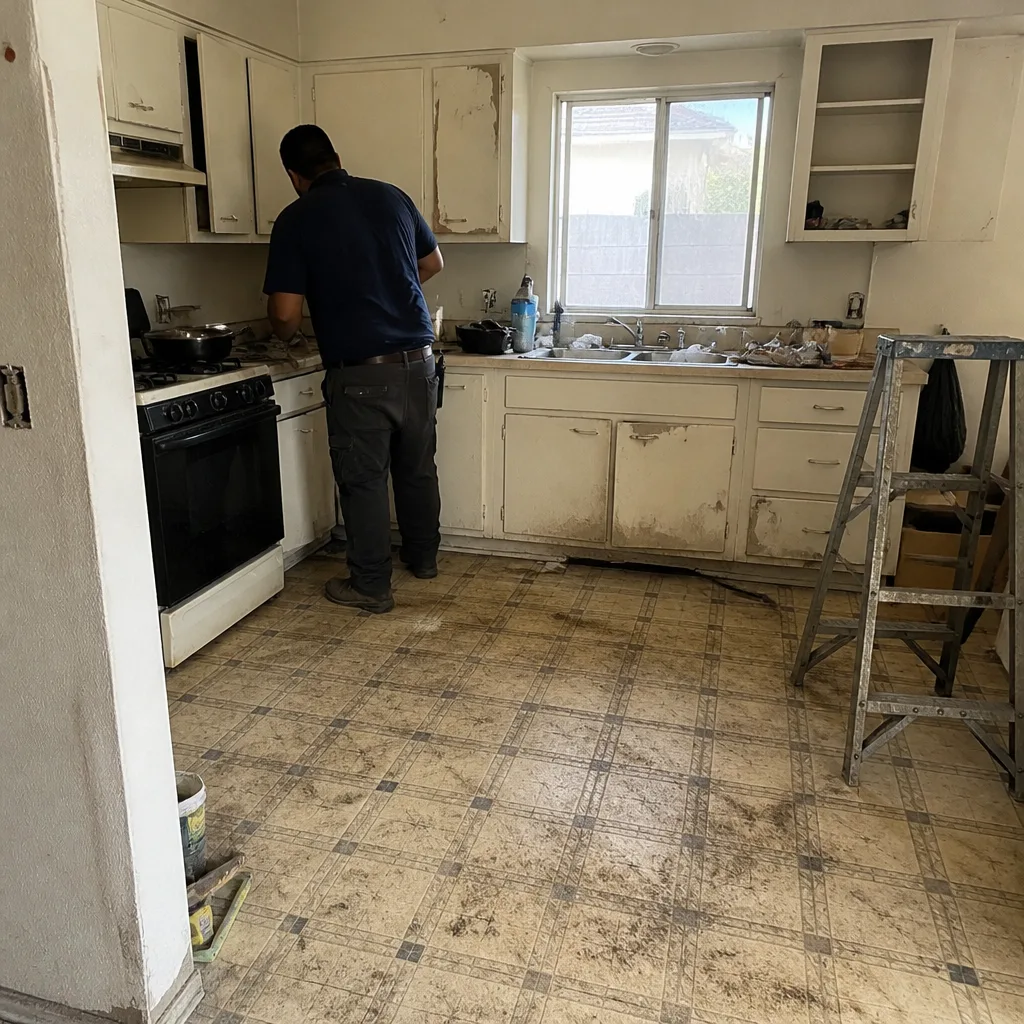 Before
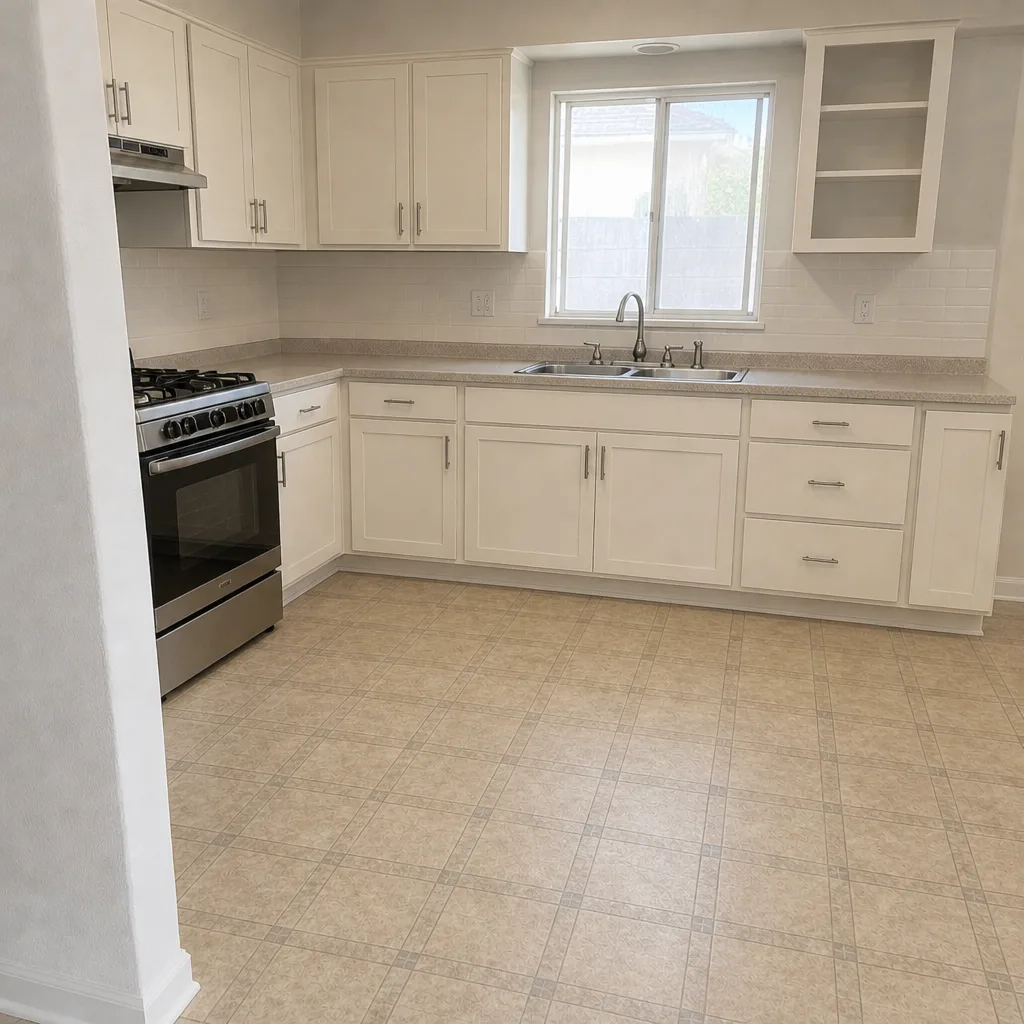 After
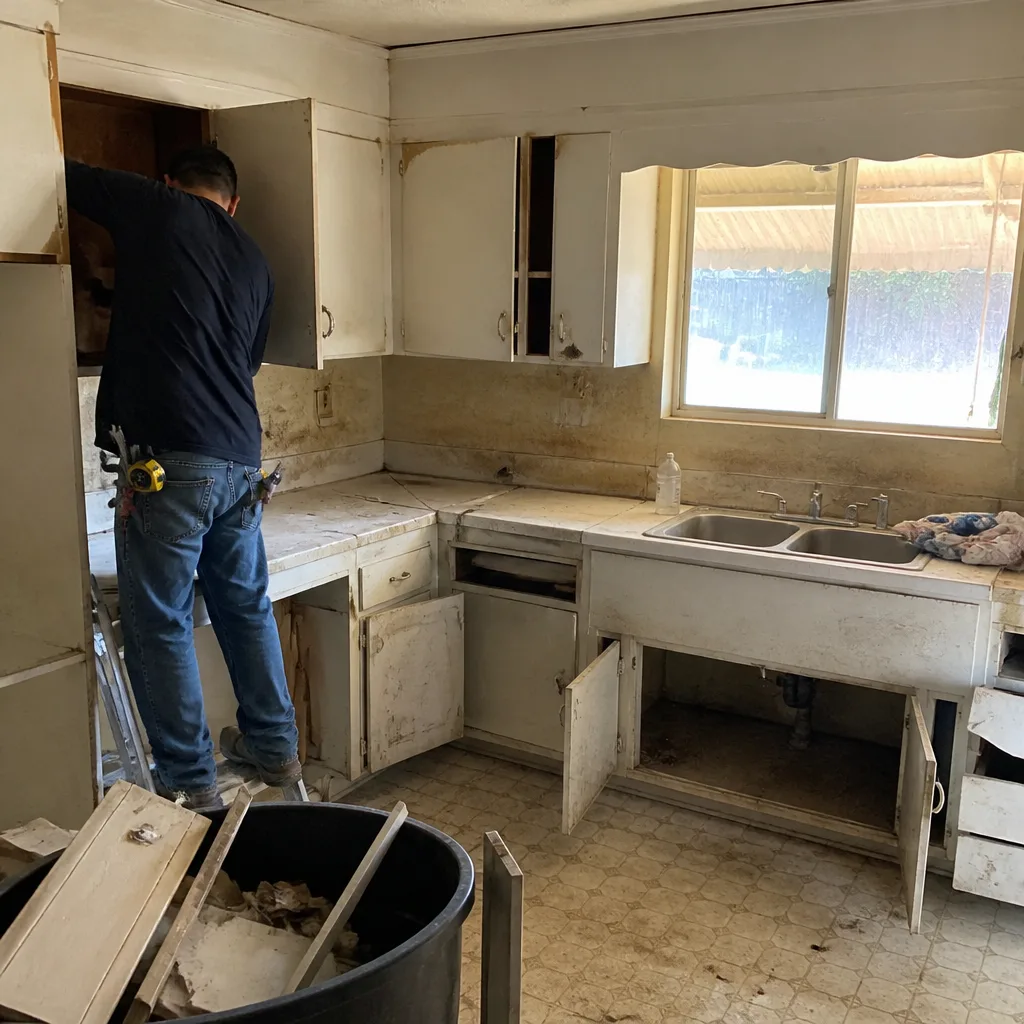 Before
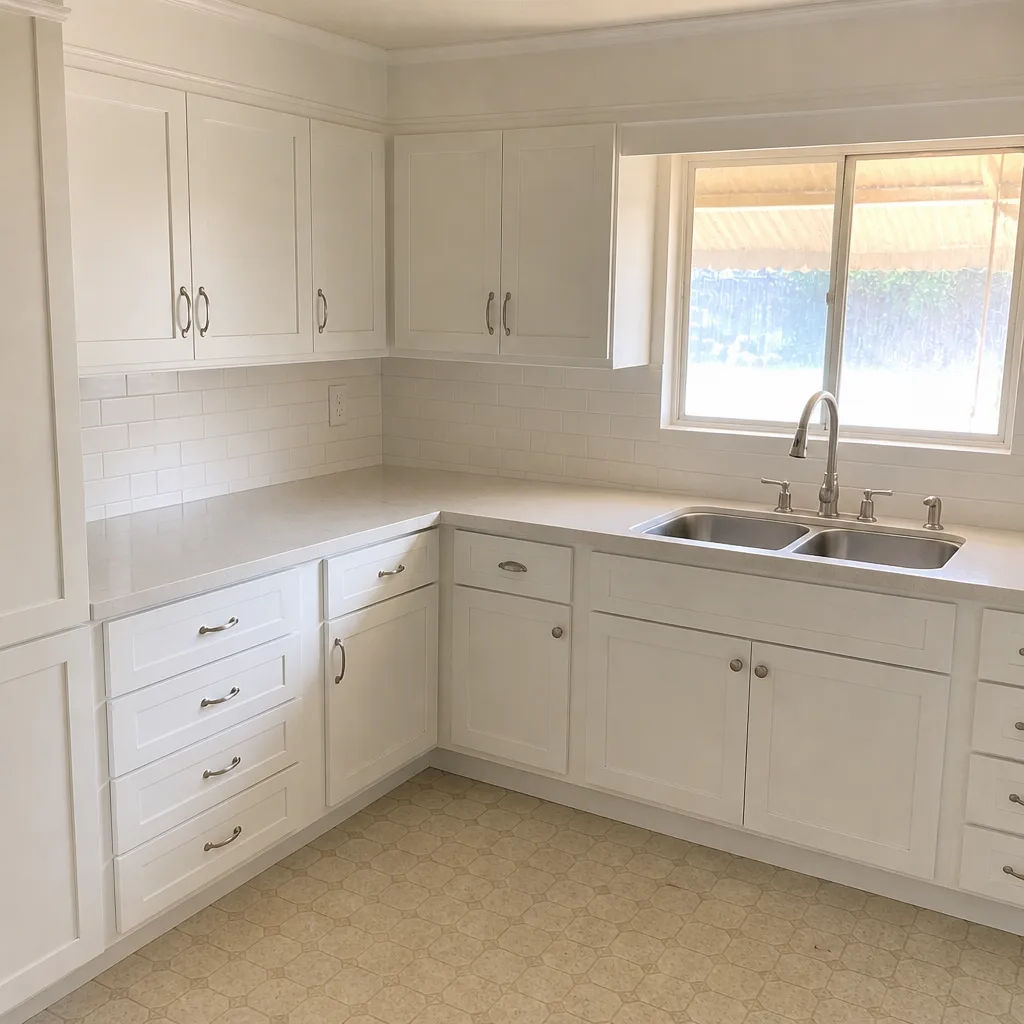 After
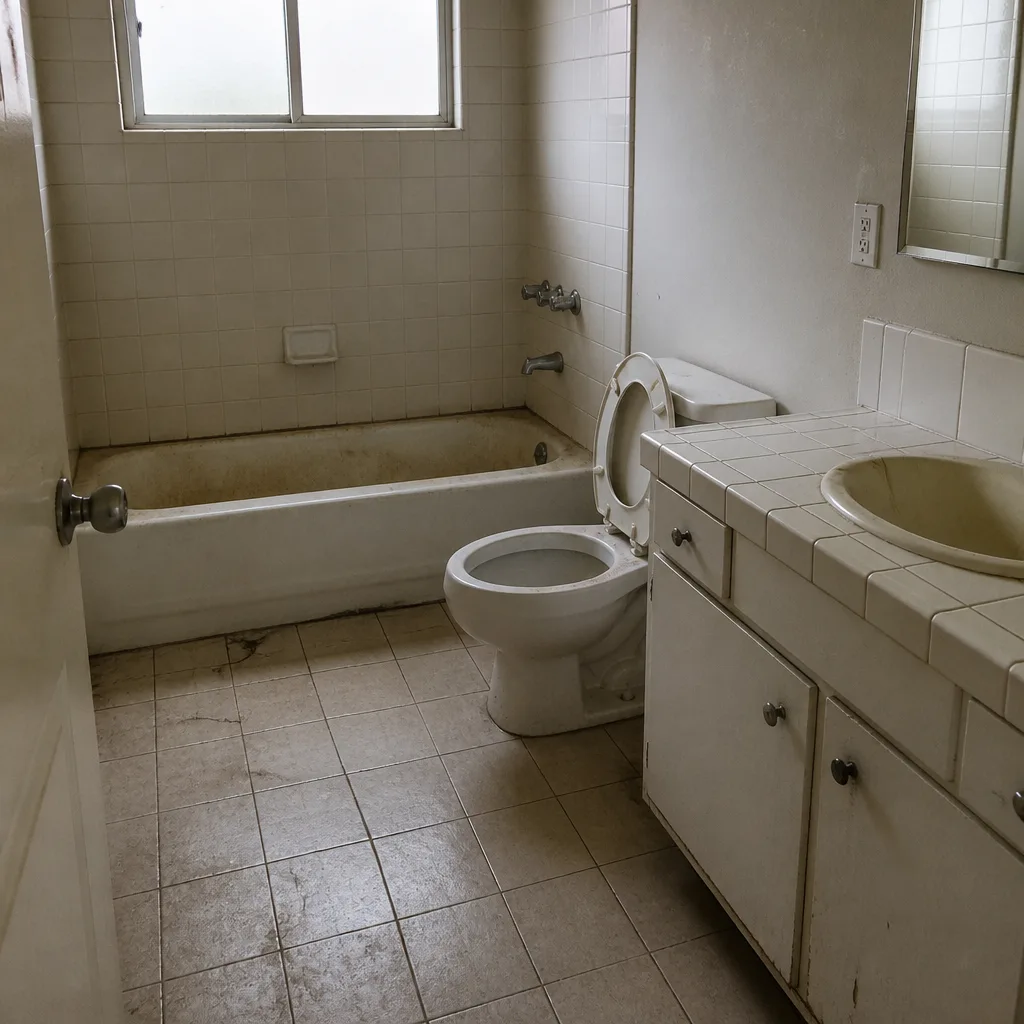 Before
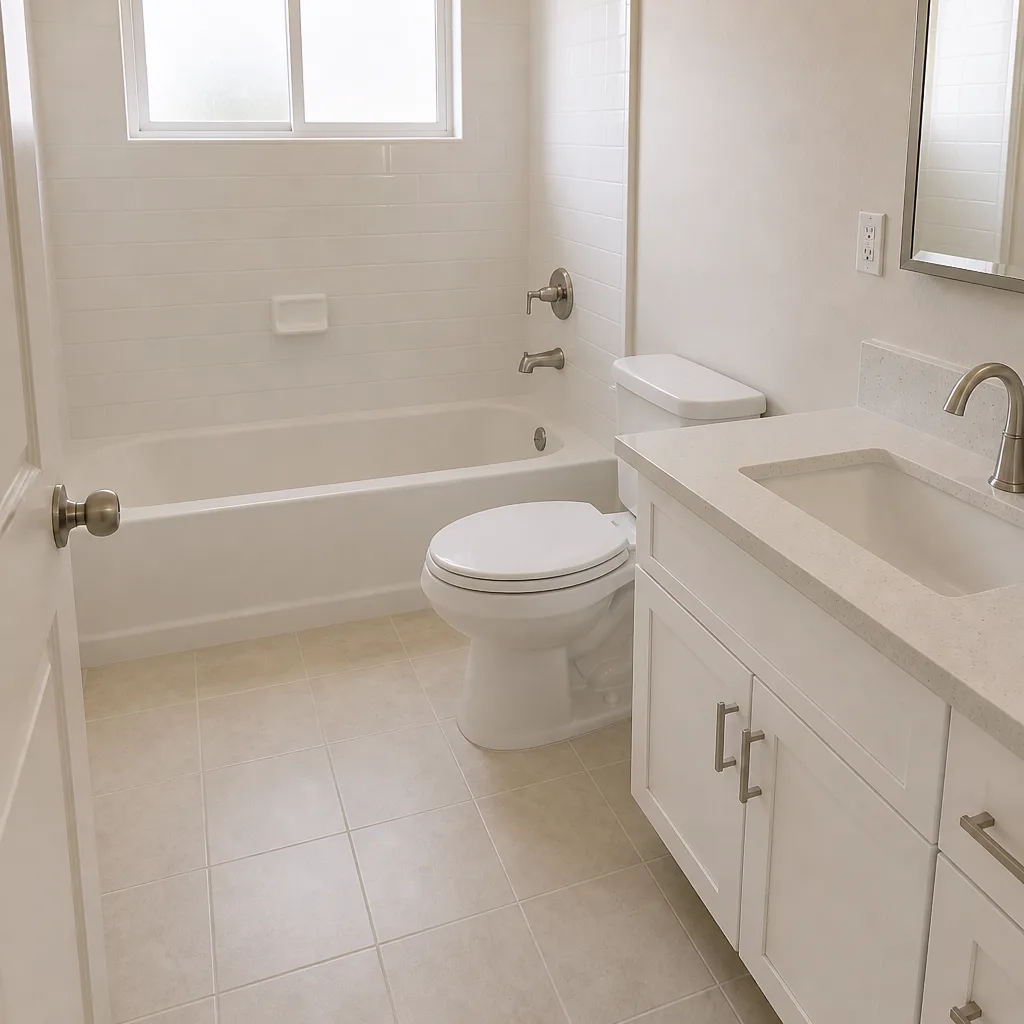 After
When to Call a Professional
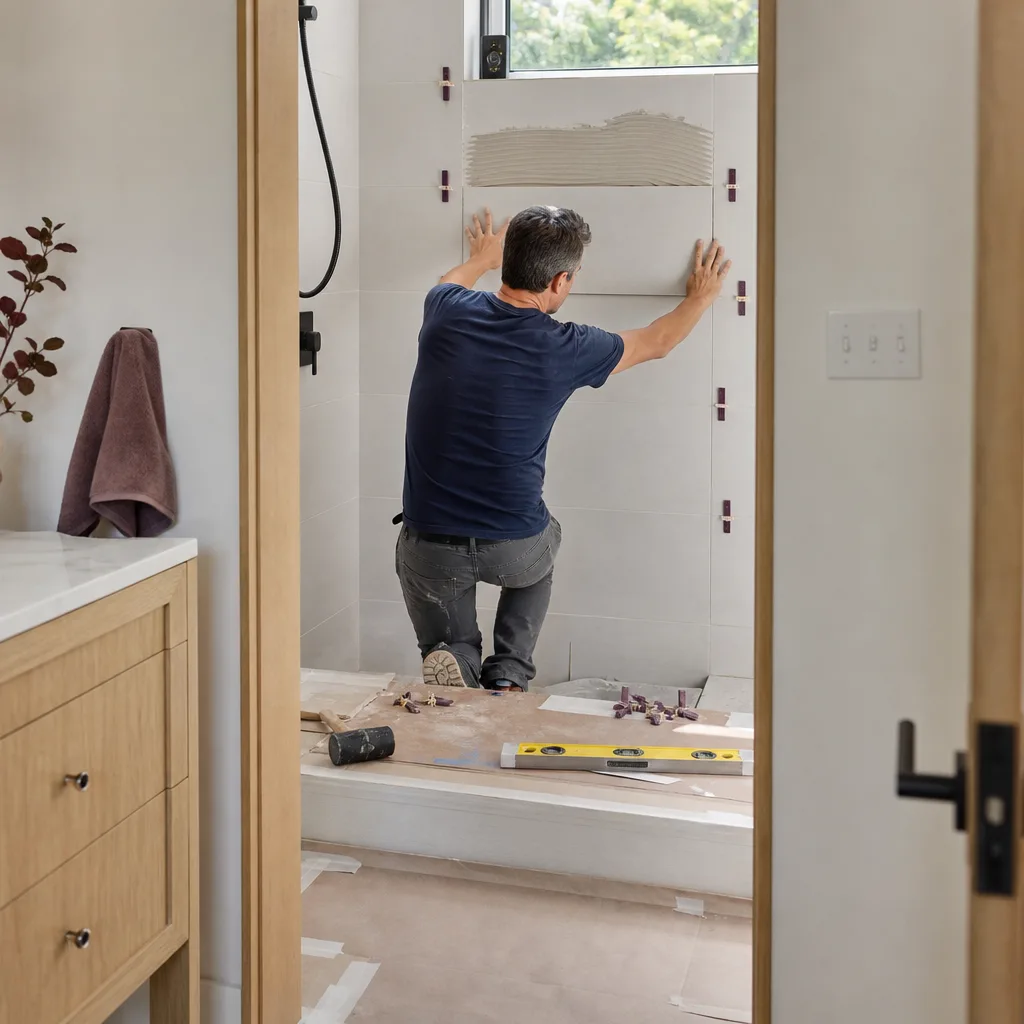
Call when the maintenance schedule keeps flagging the same spot. Soft substrate behind lifting caulk, a hollow-sounding tile field, a smell that survives a deep clean, or water showing up where it shouldn’t. Those mean the waterproofing or the plumbing behind the finish is compromised, and no amount of sealing fixes that. Call for any electrical work on the fan beyond cleaning, and call if a faucet cartridge won’t seat or the shutoff valve won’t close. And call if a warranty claim is denied and you think the manufacturer got it wrong; a documented record of maintenance is often the difference between a covered part and a full replacement.
Rowan Construction Group Santa Ana offers free estimates in Santa Ana. Every quote is a flat written price with a written scope and a written warranty before any work starts, so you can screenshot the number and compare it. Call (833) 853-5955 to schedule yours. We’ll also give a free second opinion on any written estimate you already have, reviewed line by line. Crews are background-checked and uniformed, a live person answers the phone day or night, and a documented photo record comes with every visit. For trim and fixture selection that hold up to Santa Ana water, our Fence Installation in Santa Ana page shows how we vet material brands across the trades, from Belgard to the fixtures inside.
Frequently Asked Questions
Inspect caulk joints every six months, seal grout once a year, clean the exhaust fan motor once a year, and check the faucet cartridge annually. In Santa Ana, plan the caulk inspection at the six-month mark and the grout reseal on a fixed annual date.
Yes, in practice. Delta and Moen faucet warranties expect a reasonable cartridge inspection schedule in hard-water areas, and Kohler’s finish warranty excludes damage from abrasive cleaners. Santa Ana’s hard municipal water makes scale the leading cause of a denied claim. Keep the log and the product names, and call us if you need a documented inspection to support a claim.
Usually twelve to eighteen months on a sunlit wall, and up to two years in a shaded corner. Year-round temperatures above 60°F and strong sunlight break the bead down faster here than in most markets. Inspect at six months and replace at the first sign of lifting. A caulk gun and one tube are all you need.
Yes. Clean with a pH-neutral cleaner, let it dry a full day, and apply a penetrating sealer like Aqua Mix Sealer’s Choice along the joints. Wipe excess off the tile within a few minutes and let it cure. Do it annually, and use caulk instead of grout at the floor-to-wall transition. Call (833) 853-5955 if a joint keeps cracking in the same place.
Any repair we quote comes as a flat written price with a written scope before work starts, and no change proceeds without a signed change order. That’s the discipline that keeps projects within a few percent of the agreed cost. Call (833) 853-5955 for an exact figure; the estimate is free.
It’s a repair. Soft substrate behind lifting caulk usually means the waterproofing membrane has failed behind the tile, which is out of reach and not a sealing problem. Stop caulking and get it looked at. We’ll come out, document what we find with photos, and quote the fix in writing.
The Bottom Line
A bathroom lasts as long as the joints and the ventilation are maintained, and the first five years set the pattern. The schedule is short: caulk every six months, grout seal annually, fan motor cleaning once a year, cartridge and aerator checks on the same annual date. In Santa Ana, hard water and warm temperatures make caulk and grout the pressure points, so don’t skip them. Keep a log with dates and product names; it’s what protects your warranty. The plumbing and electrical work behind the finish belongs to a trained professional, the cleaning and sealing belongs to you. If maintenance keeps flagging the same spot, that’s a repair, and it’s worth getting a written price before the damage spreads.
Written by the team at Rowan Construction Group Santa Ana.