Last updated November 18, 2026



Free written scope consultation - allowances, timeline, and change-order rules on paper before a single trade is scheduled
DIY vs Professional Windows & Doors: What’s Safe to Do Yourself
Here’s a scenario we run into more often than you’d think in Santa Ana. A homeowner replaces a bedroom window themselves, does a solid job of it, and everything looks fine for years. Then they go to sell, the buyer’s agent orders a permit history report, and the sale stalls pending a retroactive permit and inspection. The window that “worked” for six years becomes a $4,000 problem at closing. Window and door replacement sits in a strange middle zone: the physical installation is genuinely within reach of a careful do-it-yourselfer, but the permit, energy code, and weatherproofing sequence is where non-professionals create expensive problems. This guide draws the line at the exact steps that go wrong, and tells you plainly which tasks are safe to tackle yourself.
Quick Answer
Interior trim, weatherstripping on an existing door, and hardware swaps on an existing sash are safe DIY projects with no permit trigger. Full window or door replacement is not DIY-appropriate in California because any job over $500 in combined materials and labor requires a licensed contractor, a failed permit blocks Title 24 energy code certification, and the flashing and shimming steps where DIYers most often fail can hide water damage inside a wall for years before it shows. If the work involves cutting a rough opening or pulling a full frame, bring in a professional.
Styles & brands we work with
- Kitchen remodeling
- Bathroom remodeling
- Home additions & ADU
- Roofing
- Windows & doors
- Driveway & pavers
- Fence
Table of Contents
- What window and door work is genuinely safe to do yourself?
- Where DIY window installation actually fails
- The $500 rule: California’s licensed contractor threshold
- The energy code gap: why a DIY installer can’t certify Title 24
- DIY vs professional cost: the real numbers
- Santa Ana’s stucco exterior and why sealant matters
- Common mistakes to avoid
- Frequently asked questions
What window and door work is genuinely safe to do yourself?
There’s a real list of tasks a careful homeowner can handle without a permit, without specialized tools, and without creating a liability that follows the house. These fall into the category of finish work and component swaps on an existing, already-permitted opening. The window or door itself stays in the frame. You’re refreshing what surrounds it.
Specifically, these are safe:
- Interior trim replacement. Pulling old casing and installing new casing around an existing window or door is carpentry, not construction. No permit is triggered because you aren’t altering the opening, the glazing, or the weather barrier.
- Weatherstripping on an existing exterior door. Door sweeps, kerf weatherstripping, and threshold gaskets wear out every few years in Southern California sun. Swapping them is a Saturday afternoon job and a genuine energy improvement.
- Hardware replacement on an existing sash or door slab. Locksets, handles, hinges, and sash locks are consumer-grade swaps. If you can turn a screwdriver, you can do this.
- Painting and refinishing. Both interior and exterior face work, as long as you aren’t sealing over weep holes or drainage paths.
- Caulking interior gaps. Interior caulk lines at trim and drywall have no code implications.
Notice what’s not on that list: anything involving the rough opening, the frame, the glazing unit, or the flashing. The moment your work touches the weather barrier or changes the dimensions of the opening, you’ve crossed out of DIY territory. In Santa Ana, we see homeowners run into trouble at exactly this line because the interior work is easy and the exterior work looks like it should be too. It isn’t.
Where DIY window installation actually fails
The failures we see on window installations aren’t usually about whether the window is straight. They’re about three sequential steps that, done wrong, create problems that stay hidden for years. This is where the DIY gap really opens up, and it’s worth understanding each one whether or not you ever touch a window yourself.
- Flashing tape sequencing. Flashing tape is the self-adhesive membrane that seals the rough opening to the weather barrier. The critical rule is shingle-lap: each layer must overlap the one below it in the direction water flows, top over bottom, side over side. Get the lap sequence wrong and you’ve created a water path directly into the wall cavity. Water doesn’t care that the window looks fine from the driveway. It finds that path and it takes years to show up as rot or mold on an interior wall.
- Shimming to maintain square. A window has to be shimmed so that the frame is square in both planes. Out-of-square by even a small amount means the sash and hardware fight each other every time the window opens and closes. That’s not a cosmetic problem. It’s a hardware failure waiting to happen, typically within two years, and it usually voids the window manufacturer’s warranty because the failure traces back to installation.
- Exterior sealant over stucco. Santa Ana is a stucco town, and stucco needs a specific approach: a backer rod in the joint, sealant applied at the right depth and profile, and the joint designed to move without cracking. Smear a bead of caulk over a stucco joint and it cracks within a single summer of thermal cycling. Then it becomes a water entry point that the homeowner never notices.
Each of these is a skill that looks simple in a video and is genuinely hard to execute in a real wall. Flashing in particular is unforgiving; there’s no second chance once the siding or stucco goes back on.
The $500 rule: California’s licensed contractor threshold
California has a specific rule that most homeowners don’t know about, and it answers the DIY question for you on full replacement work. Under the Contractors State License Board rules, any home improvement project with a combined cost of materials and labor over $500 requires a licensed contractor. The definition is designed to be broad. It applies whether you hire someone or do the work yourself for resale purposes, and the enforcement shows up most commonly at sale.
What that means in practice: a single replacement window with hardware usually crosses the threshold on its own. A quality double-pane unit runs several hundred dollars, hardware is another chunk, and even one day of a helper’s labor pushes a full replacement well past $500. A patio door replacement clears it with plenty of room to spare.
Here’s why the threshold matters more than it looks. When a permit is required and one wasn’t pulled, the work is technically unpermitted. That doesn’t always surface immediately; most municipalities don’t patrol for it. It surfaces when a buyer orders a permit history and finds work that doesn’t match the record. At that point the seller faces three options: retroactively permit and inspect, pay the buyer a credit, or lose the sale. We’ve watched Santa Ana escrows stretch by weeks over an unpermitted window replacement that cost less than the delay. The rule exists for a reason, and it isn’t a bureaucratic inconvenience; it’s the record that protects the next buyer and the current one.
The energy code gap: why a DIY installer can’t certify Title 24
Title 24 is California’s building energy efficiency standard. It governs, among other things, the U-factor and solar heat gain coefficient of replacement windows, and it requires that new or replacement glazing meet minimum performance requirements for the climate zone. Santa Ana sits in a climate zone where the requirements are meaningful for west-facing glass in particular, because afternoon sun through a low-performance window is the difference between a livable living room and a room you can’t use between 3 and 6 pm from June through September.
The code gap isn’t about the window you buy; it’s about the certification. A licensed contractor pulling a permit triggers an inspection sequence, and the inspector verifies that the installed units meet Title 24. The contractor certifies compliance. A homeowner installing their own windows has no mechanism to certify compliance because they aren’t licensed, they can’t pull the permit, and the work cannot legally be inspected. That’s the whole story in one sentence.
And it isn’t just resale. Homeowner’s insurance typically excludes or reduces coverage for unpermitted work discovered after a claim. If water damage originates at an unpermitted window install, you may find the claim denied on the basis of work that didn’t meet code. The savings from DIY are real. The exposure is also real, and it’s the kind that waits years to show up.
DIY vs professional cost: the real numbers
Let’s put actual dollars on the page, because the comparison changes depending on whether you factor in the risk-adjusted cost of a failed rough-opening modification. These are ranges drawn from what projects actually cost in Santa Ana, not national averages.
- DIY, standard replacement window: $350-$550 for the unit, $60-$120 in flashing tape, shims, sealant, and backer rod, $150-$300 in tools if you don’t already own them (pry bar, level, oscillating tool, caulk gun, safety gear), and one to two full days of your time. Total cash out roughly $560-$970, permit and certification excluded.
- DIY with a failed rough-opening modification: add $400-$1,200 to repair a wall section where the opening had to be made larger or smaller, plus the cost of re-stuccoing the exterior, plus the possibility that the repair surfaces years later. This is the number that never makes it onto a tutorial.
- Professional replacement, single window: $600-$1,100 including unit, permit, installation, flashing, sealant, haul-away, and written warranty. The price includes the compliance trail that a future buyer will ask for.
- Professional replacement, full-frame with rough-opening work: $1,000-$2,200 per window depending on size, stucco scope, and glass specification. This is where professional work genuinely pays for itself because the rough-opening work is the hardest part to DIY correctly.
At the low end, on a small standard window, the DIY cost is real savings if everything goes right. In the middle of the range, where most projects land once you count the tools and time, the gap closes considerably. And at the top of the range, where an opening has to be resized or the wall needs repair, the professional price usually comes in lower than the true cost of doing it yourself. In our experience, the deciding factor almost never turns out to be the price of the labor. It turns out to be whether the work can be certified, inspected, and sold.
If the surrounding trades are part of your project, the calculus matters even more. Coordinating window work with Driveway & Pavers in Santa Ana or a new Fence Installation in Santa Ana on the same exterior makes sense; sequencing them badly adds cost to both. For larger scope, like a window wall tied to an addition, the case for a documented, permitted Home Additions & ADU in Santa Ana is overwhelming.
Santa Ana’s stucco exterior and why sealant matters
Santa Ana’s housing stock is largely stucco, and stucco behaves differently from siding when it comes to window and door installation. Where siding moves independently of the window, stucco introduces rigid, monolithic mass; a window cut into stucco creates a series of joints that need to move with the stucco without cracking the sealant. That requires specific products and specific sequencing that a homeowner watching a general installation tutorial will miss.
The stucco itself also needs to breathe. Stucco is permeable by design; it sheds bulk water while allowing interior moisture to escape. Seal a window improperly, block the weep screed at the base of the wall, or caulk over an expansion joint, and you’ve turned a wall that breathed into a wall that traps water inside. In a climate where the sun comes in hot and the nights cool down, thermal cycling works that trapped moisture into cracking. There’s a reason we see window-adjacent rot in Santa Ana that’s invisible from the outside: the wall is doing its job, it’s just overwhelmed by a joint that failed a season ago.
When we scope window and door work in Santa Ana, the perimeter sequence gets as much attention as the unit itself. Backer rod sized to the joint, sealant selected for the specific material it touches, the joint profile designed to move, and a documented photo record showing what was found under the stucco before the new unit went in. That record isn’t decorative. It’s what proves the substrate was sound when we started, and it’s what a future buyer will want to see.
Common Mistakes to Avoid
- Pulling the wrong permit, or none at all. In Santa Ana, window replacement requires a permit, and doing the work without one creates the escrow stall described above. Pull the permit, or hire a contractor who does.
- Buying the window before measuring the rough opening. Rough openings aren’t square and aren’t the same as the visible opening. Measure the rough opening, in at least three places on each dimension, before ordering anything.
- Skipping the shim on the hinge side. The hinge side carries the load on a swinging door and most of it on a casement. Skip the shim and you’ll get sagging, rubbing, and hardware failure within eighteen months.
- Caulking over a wet joint. Sealant won’t adhere to damp stucco. If you didn’t wait for a dry day after rain, the bead will fail before the season is out.
- Flashing tape applied bottom-to-top. The single most common sequencing error we see on remodels where a prior owner did the work. It creates a water scoop, not a watershed.
- Ignoring the weep screed. That’s the metal flashing at the base of a stucco wall that lets moisture escape. If your installation details bury it or block it, the wall will trap water behind the stucco.
- Ordering a window without checking the Title 24 U-factor requirement for the orientation. West-facing glass in Santa Ana has stricter solar heat gain limits than north-facing glass. A window that’s fine on one wall may not comply on another.
See the difference
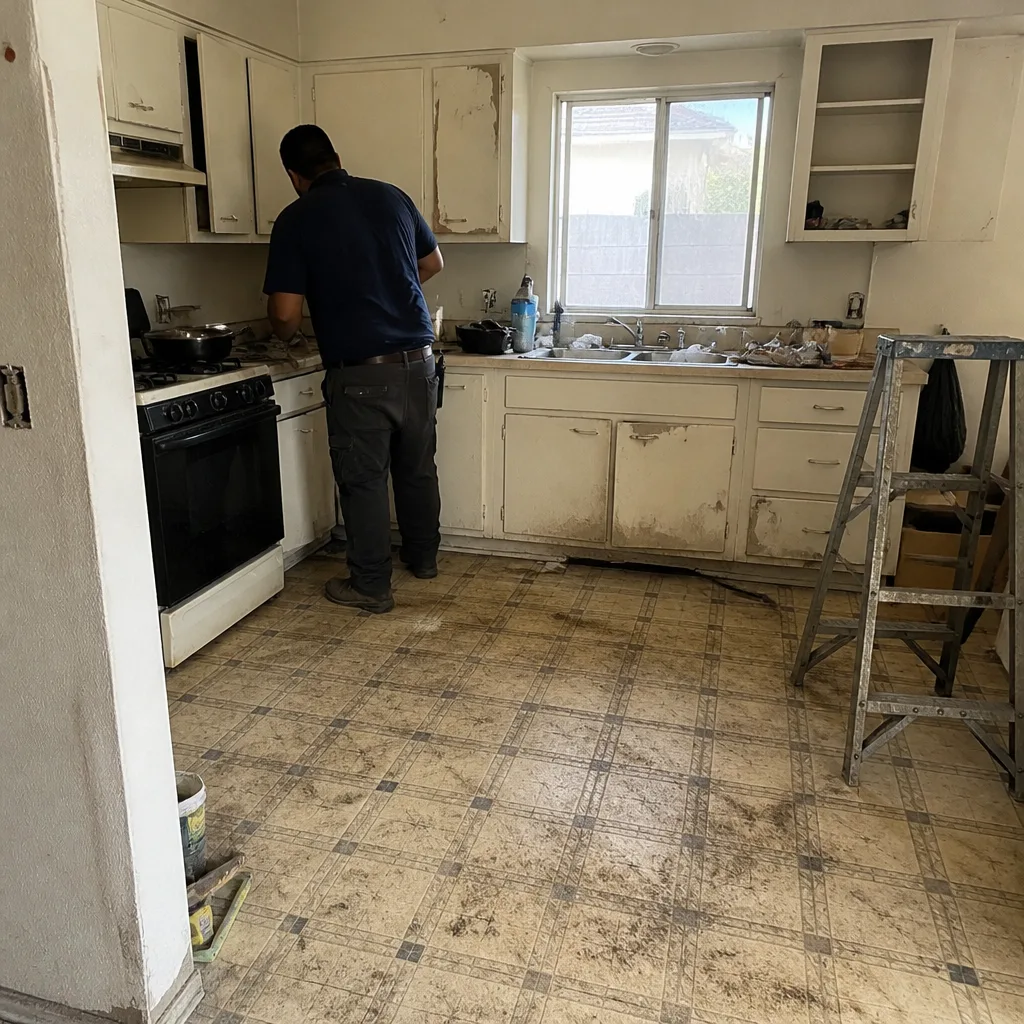 Before
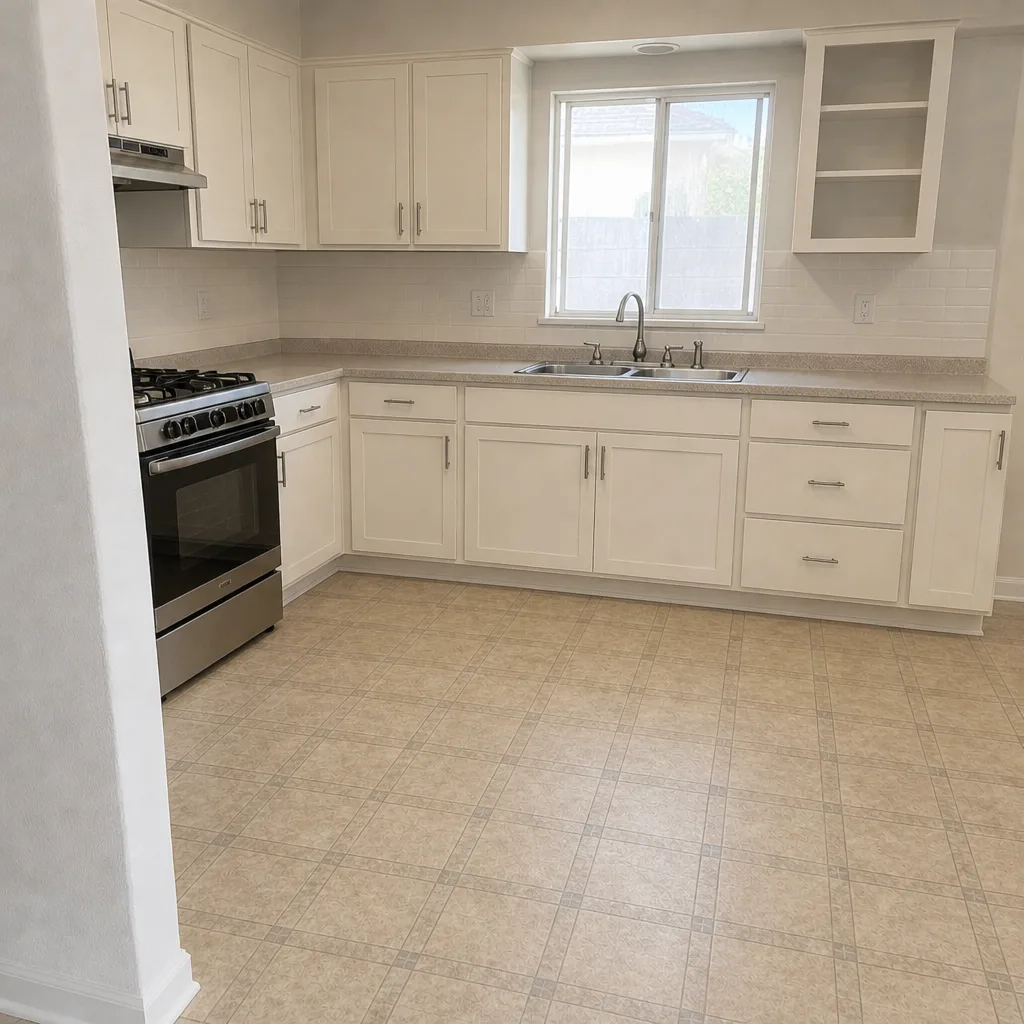 After
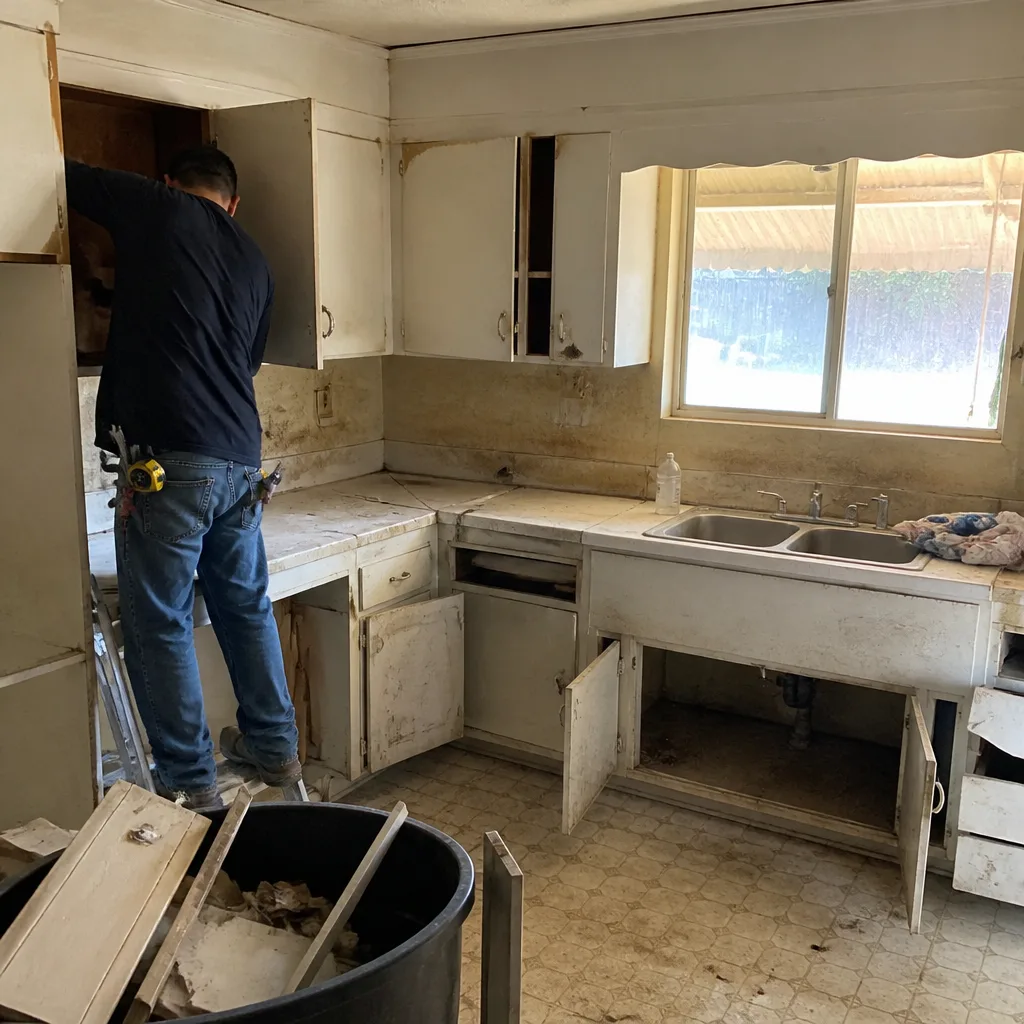 Before
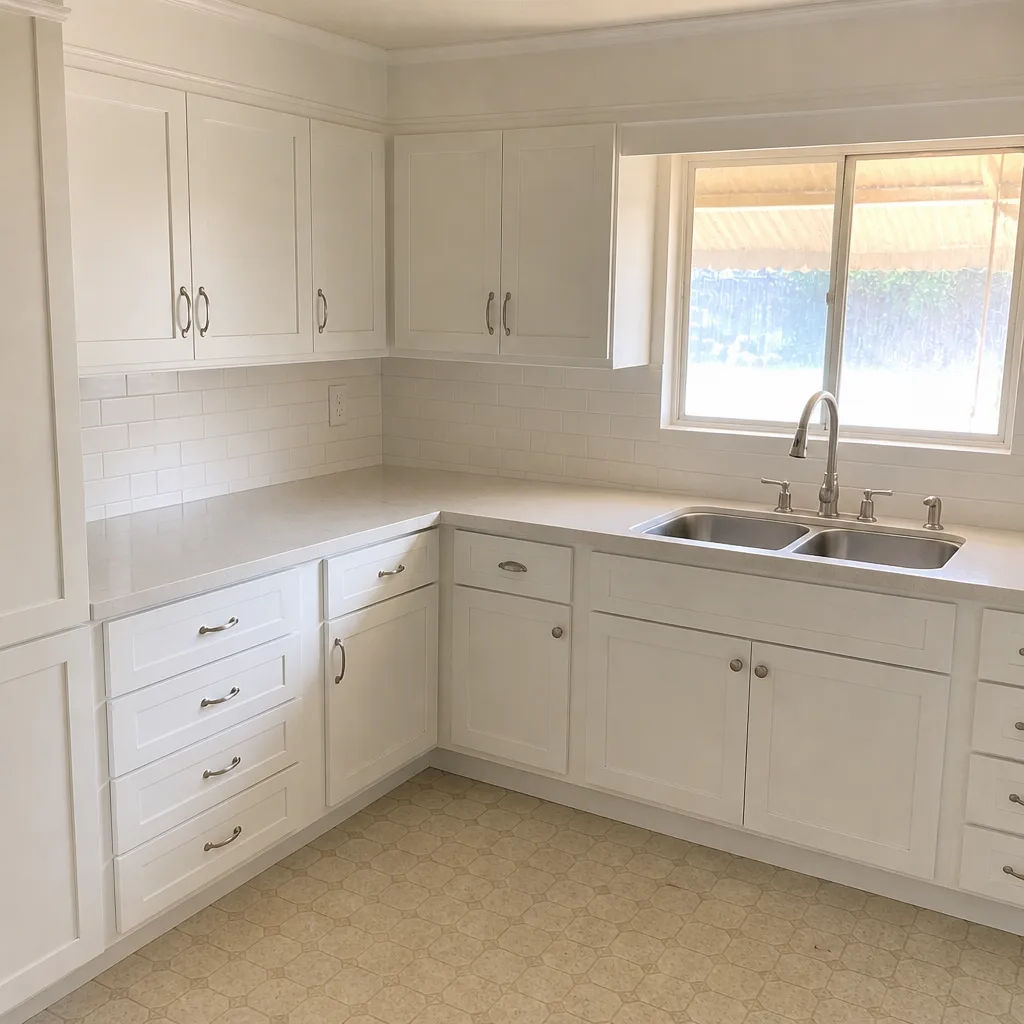 After
 Before
 After
When to Call a Professional
The scenarios where you should call a professional are specific: any door replacement, any window replacement with rough-opening work, any install where the exterior stucco has to be cut, any project where the window is part of a larger scope like a Home Additions & ADU in Santa Ana, and any project where the permit is required and the work will need to be inspected. If you’re unsure whether your project crosses the $500 threshold, it probably does. If your exterior is stucco and you haven’t installed a window in stucco before, the professional call is straightforward. The failure mode we see isn’t a bad install that looks bad; it’s a bad install that looks fine for years.
Rowan Construction Group Santa Ana offers free estimates in Santa Ana; call (833) 853-5955. Our technicians have up to 19 years of experience, we deliver a flat written price before any work starts, and we answer calls with a live person. If you already have a written quote from another contractor, we’ll review it line by line at no charge through our Free Second Opinion offer. Every visit includes a documented photo record of what we found and what we did, and the 365-Day Done Right Promise backs the work; if it isn’t done right, we make it right. For broader projects, see our Rowan Construction Group Santa Ana home page for the full scope of trades and standards.
Frequently Asked Questions
Not legally for a full replacement. California requires a licensed contractor for any home improvement over $500 in combined materials and labor, and a single replacement window with hardware typically exceeds that. Interior trim, weatherstripping, and hardware swaps on an existing window are safe to do yourself because they don’t cross the threshold and don’t alter the opening. If you’ve already bought the window and want to understand your options, call (833) 853-5955 for a free walk-through of the project.
Yes. Replacement windows require a permit, and they require an inspection that includes Title 24 energy code verification. The permit is not optional and the inspection is not pro forma; it’s the record that protects resale and insurance. Skipping it means the work is unpermitted, which surfaces at sale or at claim time. If you’d like, we can pull and manage the permit for you; call (833) 853-5955 for a free estimate.
Improper flashing tape sequencing, specifically applying it bottom-over-top instead of top-over-bottom. That creates a water path directly into the wall cavity that stays hidden for years until the interior drywall stains or the trim rots. In Santa Ana, where stucco hides that path even longer, the mistake is expensive to fix. Call (833) 853-5955 for a free assessment of any prior installation you’re concerned about.
Single-window replacement typically runs $600-$1,100 including the unit, permit, installation, and warranty. Full-frame replacement with rough-opening work runs $1,000-$2,200 per window depending on size and stucco scope. Those prices include the compliance trail a future buyer will ask for. Call (833) 853-5955 for an exact written quote on your specific project; estimates are free.
Usually not, or not fully. Most policies exclude or reduce coverage for damage traced to unpermitted work, and an adjuster who finds an unpermitted window install behind a water stain will document it. That’s the exposure that DIY guides skip. If you’re worried about a prior install, call (833) 853-5955 and we can assess it and provide a documented photo record you can share with your insurer.
Yes. Every estimate is free, and every quote is a flat written price with a written scope and written warranty before any work starts. We also offer a Free Second Opinion on any written estimate; bring a competitor’s quote and we’ll review it line by line at no charge. Rowan is founded on the Haven Standard, and Clause 1 says the price is written before anyone picks up a tool. Call (833) 853-5955 to schedule.
The Bottom Line
The line between safe DIY and professional window and door work is thinner than most tutorials suggest, and it’s drawn by California law and energy code as much as by skill. Interior work is yours. Full replacement isn’t, not because you can’t install a window but because you can’t certify one. The three failures that matter most, flashing sequencing, shimming to square, and exterior sealant on stucco, are exactly the ones that hide the longest. For any project in Santa Ana that crosses $500, involves the rough opening, or touches the stucco, a licensed contractor protects your resale, your insurance, and the next five years of your weekend. Read our Fence Installation in Santa Ana guide if you’re planning exterior work on the same schedule, and call us when you’re ready for the number in writing.
Call Rowan Construction Group Santa Ana at (833) 853-5955 for a free estimate. Written price before any work starts, documented photo record on every visit, and the 365-Day Done Right Promise on every job.
Written by the team at Rowan Construction Group Santa Ana.