Last updated November 18, 2026








Free written scope consultation - allowances, timeline, and change-order rules on paper before a single trade is scheduled
Construction Warning Signs: A Santa Ana Homeowner’s Reference Guide
A diagonal crack running from the corner of a door or window frame is one of the most Googled construction warning signs in California, and it has three completely different causes that require three completely different responses. Only one of them is structural. The other two are cosmetic or moisture-driven, and treating them as emergencies wastes money. Treating the structural one as cosmetic costs far more. This guide sorts the fifteen most common visible defects in Santa Ana homes into severity tiers, names the trade responsible for each, and tells you what to photograph before you call anyone.
Quick Answer
Most construction warning signs in Santa Ana fall into three tiers: monitor (hairline stucco cracks, minor paint bubbling), schedule repair (widening cracks, ceiling stains, sticking doors), and stop using the space (spongy floors, sparking outlets, sagging rooflines). The severity comes down to width, orientation, and pattern, not how alarming the defect looks. A 1/16-inch diagonal crack at a window corner is usually cosmetic stucco movement. A horizontal crack in a foundation stem wall is not.
Styles & brands we work with
- Kitchen remodeling
- Bathroom remodeling
- Home additions & ADU
- Roofing
- Windows & doors
- Driveway & pavers
- Fence
Table of Contents
- The Three-Tier Severity System
- Reading Stucco Cracks: Cosmetic vs. Lath vs. Foundation
- What Moisture Stains Actually Tell You
- Warning Signs of Unpermitted Electrical, Plumbing, and HVAC Work
- Roofline and Exterior Warning Signs in Santa Ana’s Climate
- How to Photograph and Document Warning Signs
- Which Trade Fixes What: A Defect-to-Contractor Map
- When to Call a Professional
The Three-Tier Severity System
Most warning-sign guides hand you a list and walk away. That leaves you either paralyzed or overreacting. Here’s the framework we use on every walkthrough. Every defect gets a tier, a probable cause, and a next step.
Tier 1 – Monitor. Document it with a dated photo and a pencil mark across the crack. Re-check in 30 days. If the pencil mark hasn’t separated, the movement has stopped or was seasonal. Hairline stucco crazing, minor paint bubbling on interior walls, and single sticking doors fall here. Santa Ana’s swings between dry Santa Ana winds and winter rain cycles move soil and stucco constantly, so some seasonal cracking is normal.
Tier 2 – Schedule Repair. Book a contractor within 30 to 60 days. These aren’t emergencies, but they worsen. Widening cracks (over 1/8 inch), recurring ceiling stains, doors that stick consistently across seasons, and grout lines that keep opening belong here.
Tier 3 – Stop Using the Space. Act now. Spongy or bouncy floor sections, sparking or warm-to-the-touch outlets, a roofline that visibly sags, water actively dripping near a light fixture, or a gas smell. These are safety issues, not maintenance items. Turn off the breaker or gas at the source and call a licensed professional.
- Tier 1: Cosmetic or seasonal. Monitor with a dated photo and pencil mark.
- Tier 2: Active deterioration. Schedule a written estimate within 30 to 60 days.
- Tier 3: Safety risk. Stop using the space and call now.
Reading Stucco Cracks: Cosmetic vs. Lath vs. Foundation
Stucco on Santa Ana homes hides the answer, which is why the diagnostic work happens at the crack itself. Three criteria separate the cases: width, orientation, and pattern.
Cosmetic crazing. Fine, web-like cracks under 1/16 inch, random in direction, usually on south and west-facing walls. This is the stucco skin drying and shrinking. It’s a paint-and-patch item, nothing more.
Lath separation. Cracks that follow a straight line, often horizontal or along a seam, sometimes with a hollow sound when tapped. The stucco has pulled away from the wire lath underneath. This is a moisture-entry problem. Water gets behind the stucco and the fix involves re-securing the lath and re-flashing, not just painting over.
Foundation movement. Diagonal cracks running 45 degrees from window and door corners, wider at one end than the other, paired with doors that no longer latch. A crack that widens toward the top tells you the wall is being dragged, not just settling. This is the one that needs a structural evaluation.
- Measure the width with a dime – a dime is about 1/16 inch thick. If the crack swallows it, that’s Tier 2.
- Note the orientation. Vertical and random: usually cosmetic. Diagonal from a corner: check for movement. Horizontal in a stem wall: flag for structural review.
- Trace the pattern. A single crack is one thing. A cluster radiating from the same corner is another.
- Tap the wall. Hollow sound means the stucco has separated from lath.
- Photograph with a tape measure laid across the crack for scale.
For homes where movement is confirmed and repairs run deep, our Home Additions & ADU in Santa Ana page covers how structural remediation ties into larger builds.
What Moisture Stains Actually Tell You
A ceiling stain is rarely directly below its source. Water travels along framing, sheathing, and drywall paper before it shows, so the brown ring you see in a hallway may trace back to a roof penetration six feet away. Here’s how to read the pattern.
- Roof leak: Staining that appears or darkens during and after rain, often near a chimney, vent stack, or valley. Look for a matching dark streak on the roof sheathing if accessible. Ask our Rowan Construction Group Santa Ana home team for a roof inspection if the pattern recurs.
- Plumbing leak: Staining that’s constant, grows regardless of weather, and often sits below a bathroom or kitchen. Warm or damp feel at the stain, or a musty smell, points to a slow supply or drain leak.
- Condensation: Staining near windows, in bathrooms, or on cold exterior walls, usually with surface mold. Santa Ana’s marine layer pushes interior humidity up in spring and early summer, which makes this the most common false alarm.
Document the stain with a photo on the day you find it. Draw a pencil outline of the edge on the drywall. If the outline doesn’t move in two weeks, it’s historical. If it moves, water is still entering and it’s Tier 2.
Warning Signs of Unpermitted Electrical, Plumbing, and HVAC Work
California’s Contractors State License Board runs enforcement stings across Orange County regularly, and the case files share patterns. Homeowners buying between 2015 and 2025 often inherit work done by unlicensed “handymen” who skipped the permit. These are the tells, drawn from what CSLB enforcement cases consistently document.
Electrical red flags:
- Panel breakers labeled in mismatched handwriting or not labeled at all.
- Outlets or switches installed crooked, with visible gaps at the plate.
- Wires spliced outside a junction box, or loose conductors visible in a panel with no cable clamps.
- No GFCI protection in bathrooms, kitchens, or garage outlets in a home built or remodified after the code required it.
Plumbing red flags:
- Flexible supply lines used as permanent connections under sinks where rigid lines belong.
- Drain slopes that don’t match gravity – visible in basement or crawlspace runs as a backslope or a sag between hangers.
- No visible inspection tag or permit record for a replaced water heater.
HVAC red flags:
- A condenser unit installed with no visible pad, mismatched in size to the ductwork, or wired with an extension cord.
- Refrigerant lines routed through unprotected exterior wall penetrations.
- No filter access door, or a filter sized wrong for the return grille.
If you see these, pull the permit history from the City of Santa Ana’s online portal before you buy or renovate. Unpermitted work is not a dealbreaker, but knowing whether it’s electrical, plumbing, or HVAC decides which trade leads the remedy.
Roofline and Exterior Warning Signs in Santa Ana’s Climate
Santa Ana sits in a coastal-inland transition. That means dry winds, dry-summer UV, and winter rain concentrated in a few storms. The roof and exterior tell you how well the home handles that.
- Curling or lifted shingles: Heat cycling on south and west slopes. On GAF and Owens Corning asphalt shingles, granules in gutters signal end-of-life weathering. Check with our Fence Installation in Santa Ana and roofing team on an exterior inspection if the gutters fill with granules.
- Sagging roofline: A ridge that dips in the middle is Tier 3. It points to a failed rafter or a compromised ridge board, not just a worn shingle layer.
- Deteriorating fascia and soffit: Soft wood at the roof edge that crumbles when poked. Santa Ana’s dry winds are less punishing than coastal salt, but the winter rain cycles attack unprotected fascia.
- Weep screed staining: Rust or efflorescence streaks at the base of the stucco. Water is draining behind the stucco and coming out at the weep screed, which is the system working – unless the staining is fresh and heavy.
- Driveway and hardscape cracks: Widened joints and sunken panels in concrete are usually soil movement. Our Driveway & Pavers in Santa Ana guide covers how pavers with a properly compacted base handle this better than a monolithic pour.
Regional prefab approaches – Mighty Buildings and Boxabl units, for example – are increasingly referenced in Santa Ana ADU conversations. They still tie into your existing roofline and drainage, so the same warning signs apply at the joint line.
How to Photograph and Document Warning Signs
Documentation is what turns a sticky note on the fridge into a record a contractor can price from and an insurance adjuster can evaluate. Here’s what actually works.
- Establish scale. Lay a coin, tape measure, or ruler next to the defect. Every photo without scale is another photo you’ll have to retake.
- Take three distances. A wide shot for room context, a medium shot for the wall or ceiling, and a macro shot of the defect itself.
- Get the date in writing. Note the date on a slip of paper in the wide shot, or name the file with the date.
- Mark the crack. Pencil a short perpendicular tick across the crack, then photograph. Re-measure in 30 days. The width change is the diagnostic.
- Note the weather. Log whether the damage grew after a rain event, a Santa Ana wind event, or has been constant. This single field helps a contractor distinguish roof, plumbing, and condensation.
- Keep a folder. Every defect gets its own folder with photos and the date field. Bring it to the estimate.
Under our Haven Standard, we deliver a documented photo record on every visit as a standard deliverable, not an upgrade. That means what we find and what we fix is on file when you compare estimates. Bring a competitor’s estimate and we’ll review it line by line at no charge.
Which Trade Fixes What: A Defect-to-Contractor Map
Most homeowners land on a symptom and don’t know who to call. Here’s the map, drawn from the seven trades we run: Kitchen Remodeling, Bathroom Remodeling, Roofing, Windows and Doors, Fence Installation, Driveway and Pavers, and Home Additions including ADUs.
- Diagonal crack at window or door corner: Home Additions team for structural review, then Windows and Doors if the frame is out of square.
- Ceiling stain: Roofing if it tracks with rain, Bathroom Remodeling or a plumber if it’s below a bathroom, and a general assessment if the source is unclear.
- Sagging roofline: Roofing first, Home Additions if the framing is involved.
- Leaning or cracked fence posts: Fence Installation. Santa Ana’s soil movement and dry winds stress post footings first.
- Sunken driveway panels: Driveway and Pavers.
- Sparking outlet or warm panel: A licensed electrician, immediately. Not a construction trade – call one today.
If more than one trade is involved, get a written scope across all of them. Under Clause 1 of the Haven Standard, the price is written before anyone starts, and no work proceeds on a change until the change order is signed.
See the difference
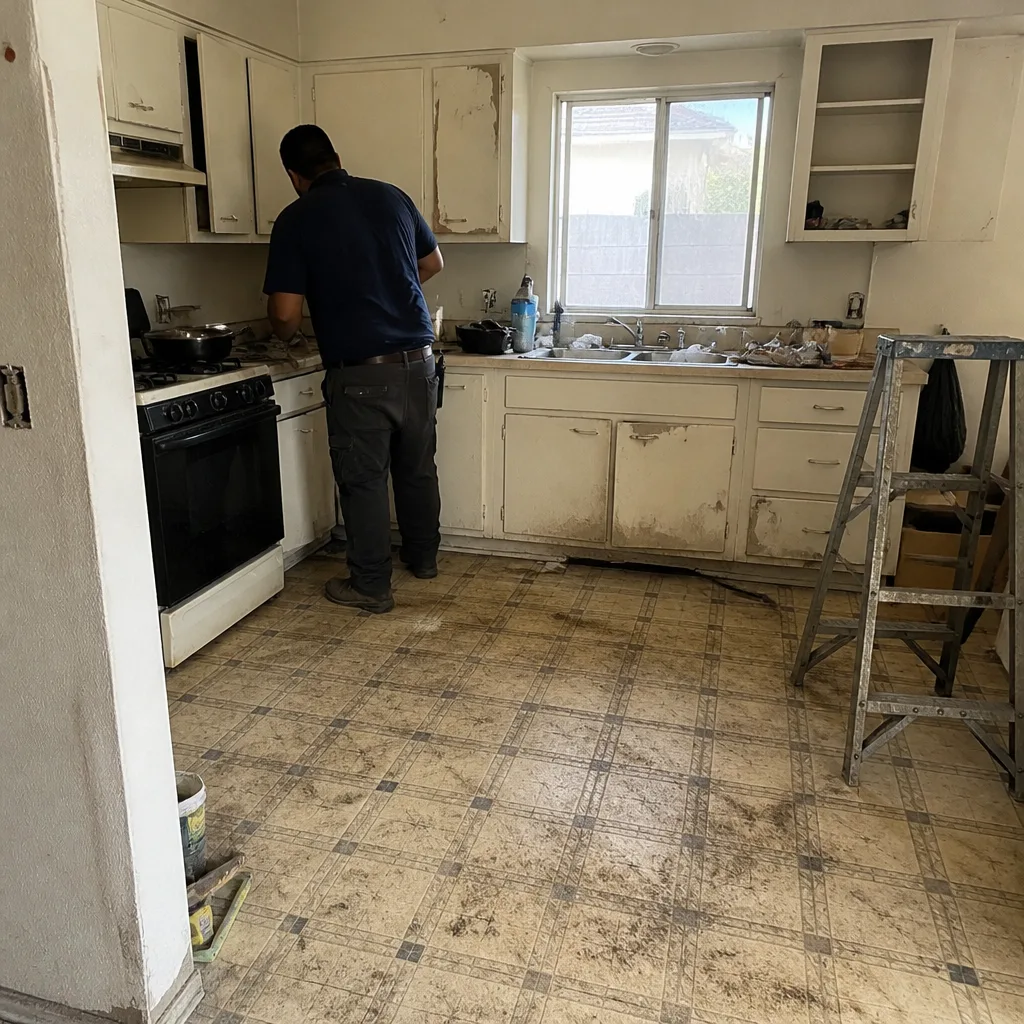 Before
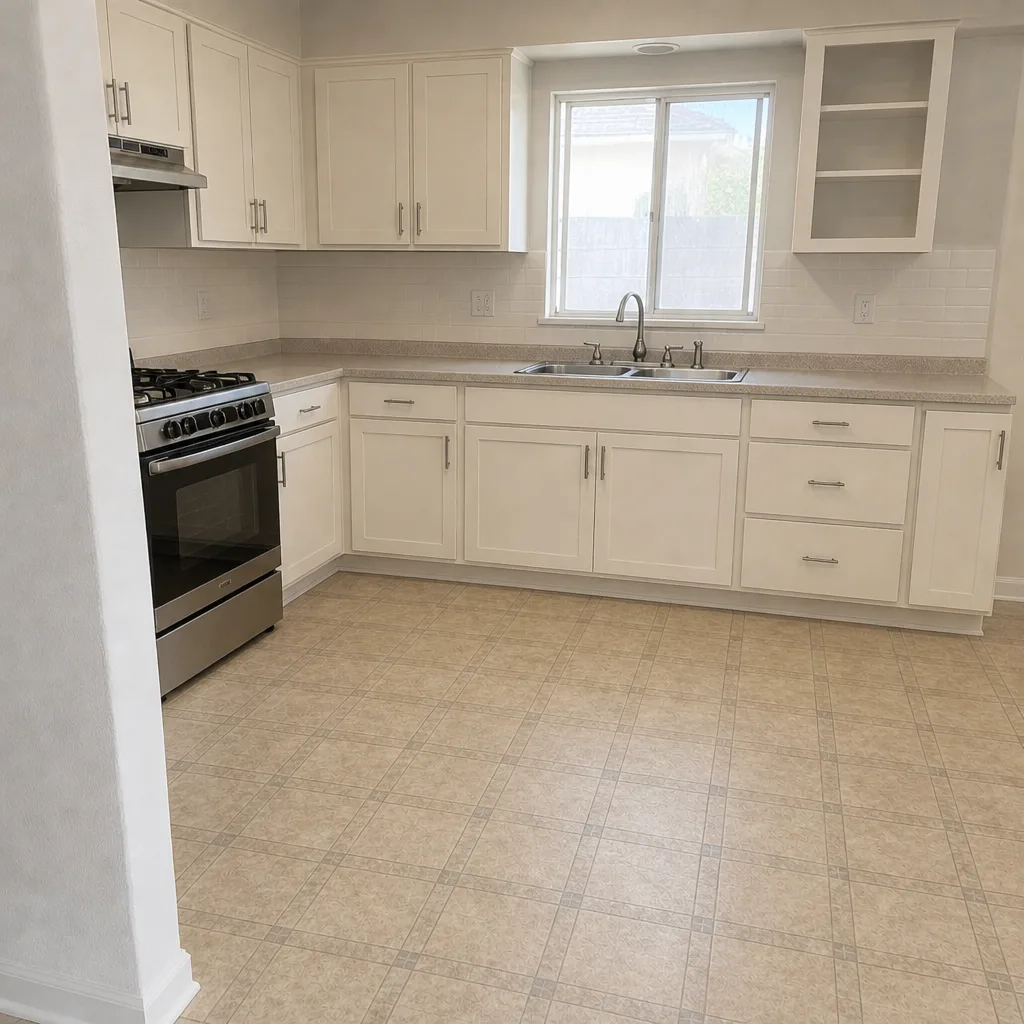 After
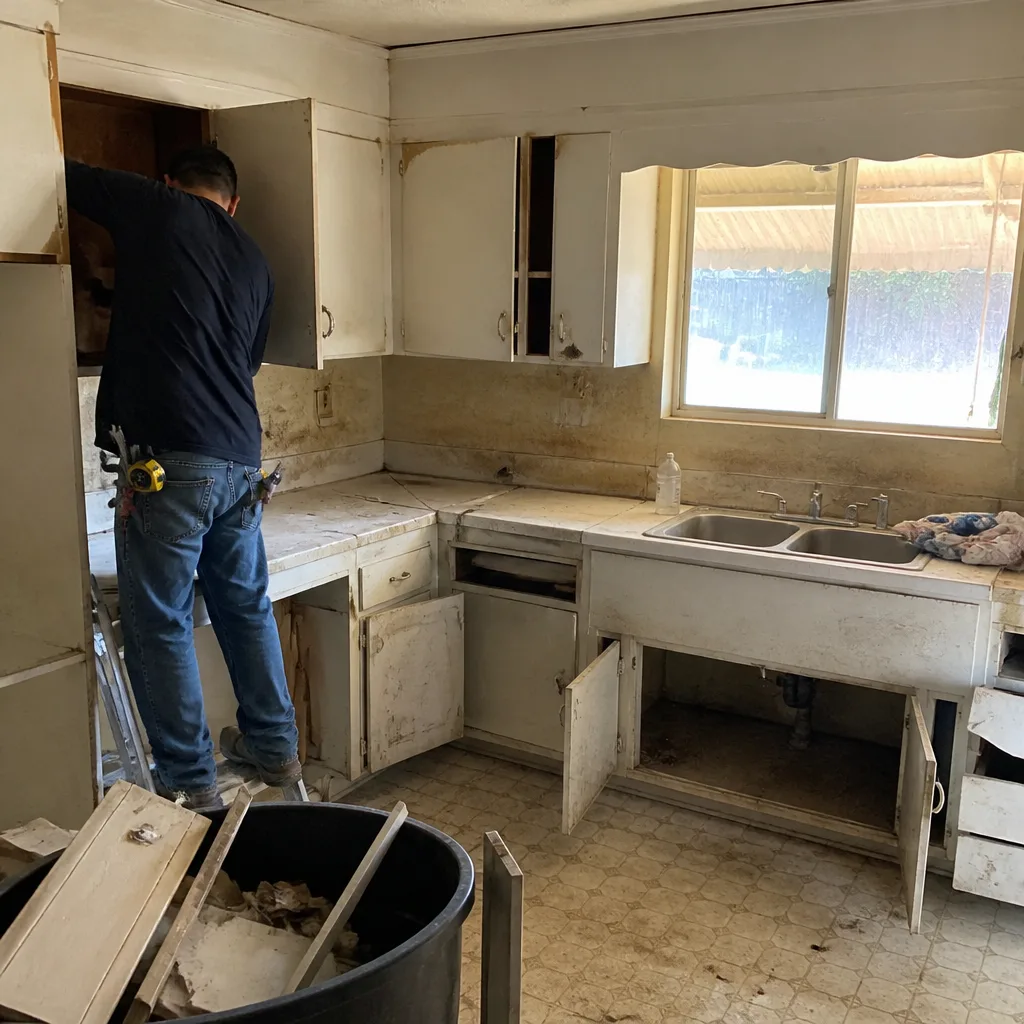 Before
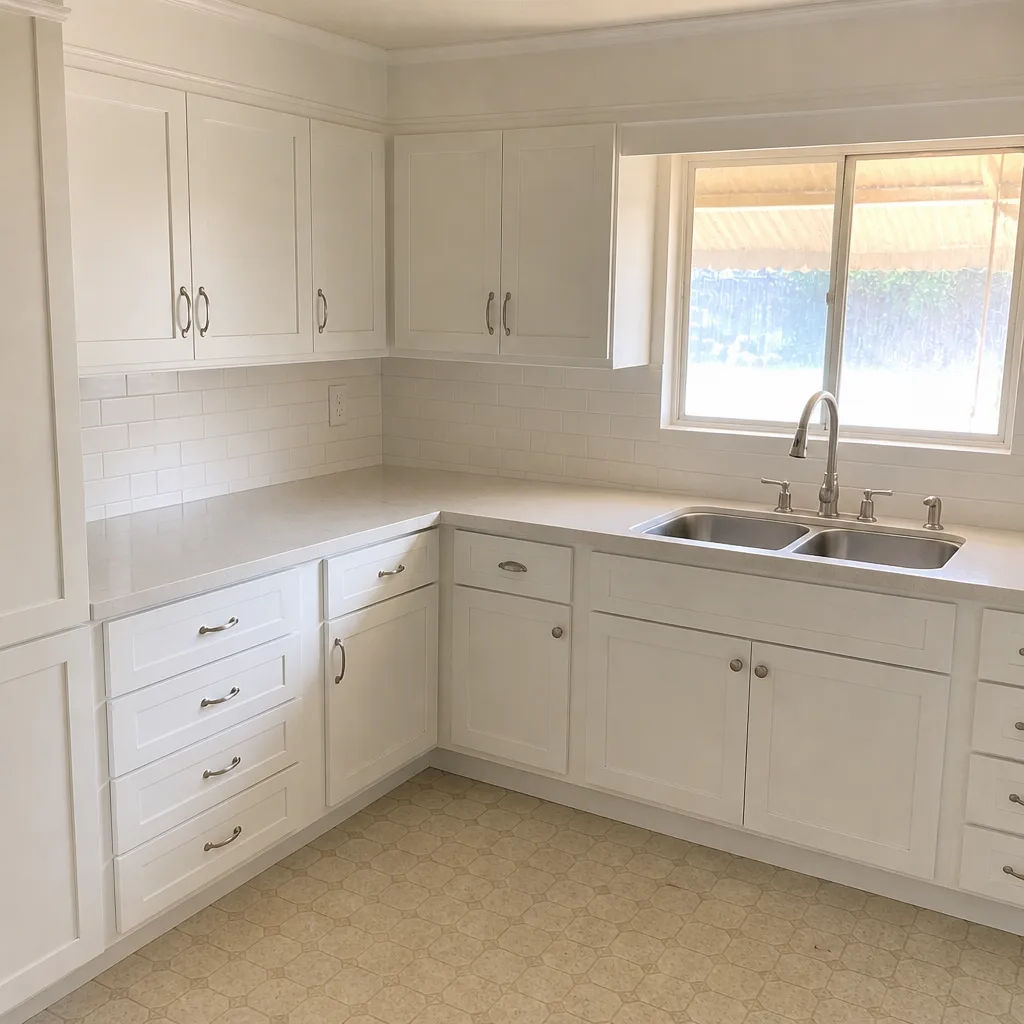 After
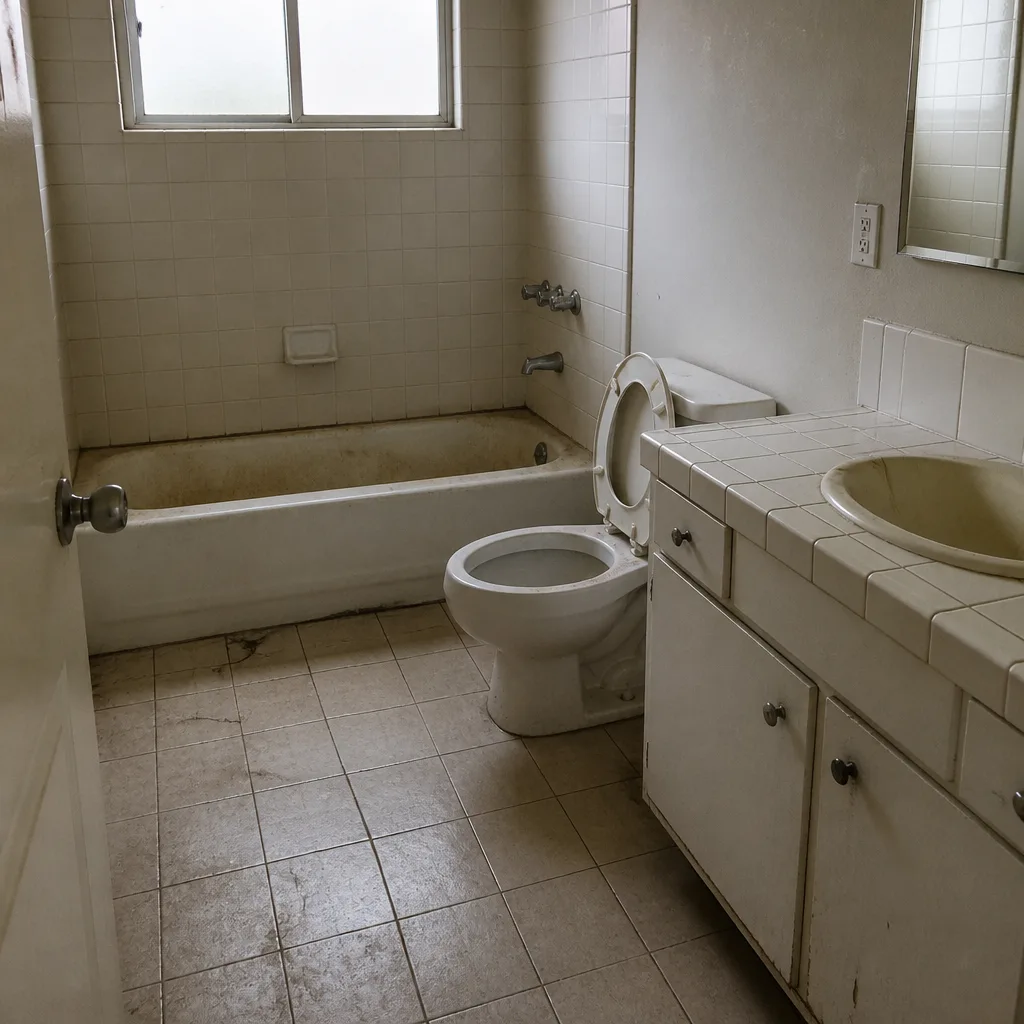 Before
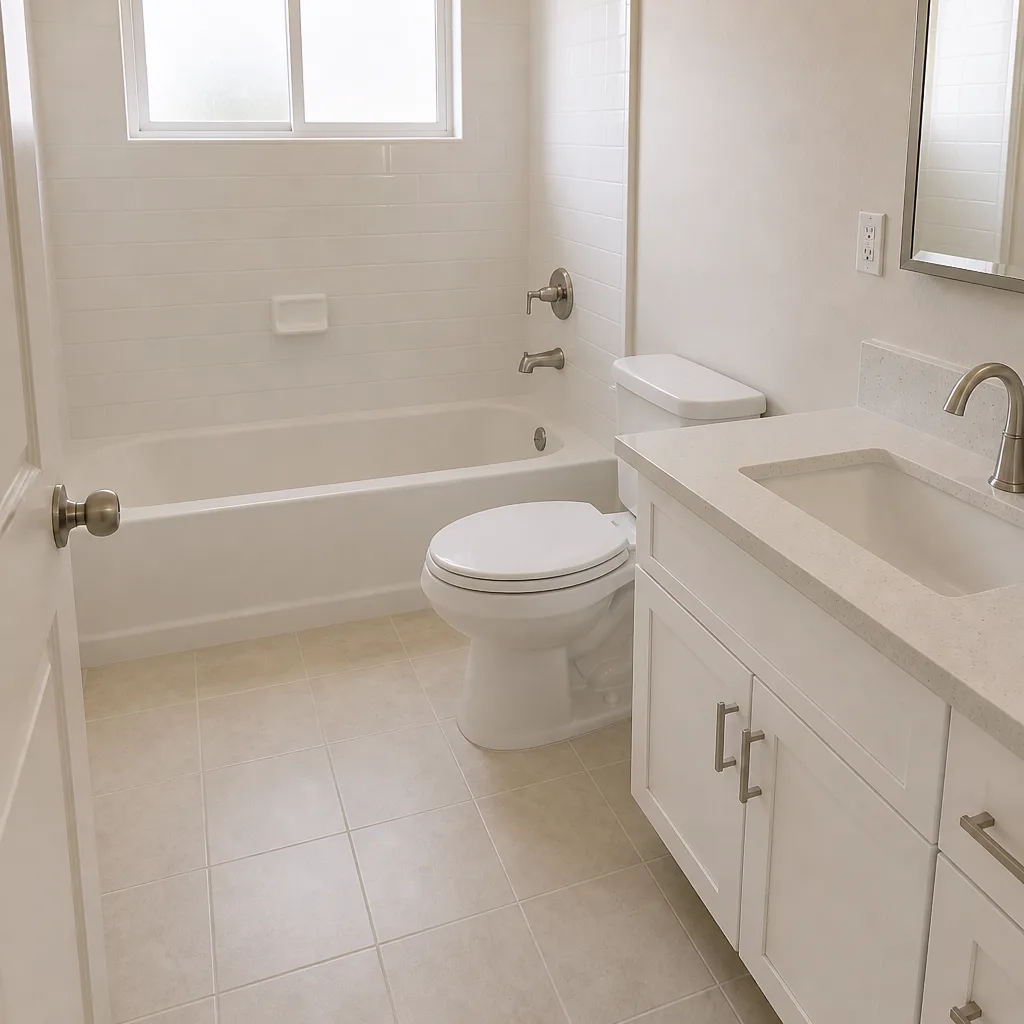 After
Common Mistakes to Avoid
- Painting over a ceiling stain before you find the source. In Santa Ana homes, a fresh coat hides the pattern that would have told the contractor whether it was roof, plumbing, or condensation. Find the source first, then paint.
- Treating a diagonal crack at a window corner the same as a stem wall crack. They point in opposite directions – one is usually stucco movement, the other is foundation movement.
- Skipping the permit history on a 2015-2025 purchase. Pull the City of Santa Ana permit record before you make an offer. Unpermitted electrical or plumbing is discoverable there, and it changes your negotiating position.
- Assuming a single sticking door is normal. One seasonal sticky door is common. Every door in the house sticking at the same time is a structural signal.
- Calling an unlicensed “handyman” for Tier 2 repairs. California law requires a licensed contractor for work over $500. The record of that work will surface when you sell.
- Photographing defects without scale. A crack photo with no tape measure reads as “crack” – not “1/8 inch, growing.”
- Accepting a verbal estimate. You can’t compare what isn’t written. Our written price comes before any work starts on every trade, with a written scope and a written warranty.
When to Call a Professional
Call now if you see a spongy floor, a sparking outlet, a sagging roofline, an active water drip near a light fixture, or any gas smell – those are Tier 3. Call within 30 days if a crack has widened past 1/8 inch, a ceiling stain keeps growing, doors stick across seasons, or a permit history shows unpermitted electrical or plumbing. Call before you buy if the seller’s disclosure hints at recent construction with no record. Rowan Construction Group Santa Ana offers free estimates in Santa Ana – call (833) 853-5955. Our technicians have up to 19 years of experience, every crew is background-checked and uniformed, and a live person answers the phone around the clock.
Frequently Asked Questions
A sagging roofline, a spongy floor, or a sparking outlet are the most serious warning signs because they indicate a live structural or electrical failure. None of them are maintenance items. Turn off the breaker or gas at the source and call a licensed professional today.
Structural cracks are diagonal, run 45 degrees from a window or door corner, are wider at one end than the other, and are usually over 1/8 inch wide. Cosmetic stucco crazing is fine, random, and under 1/16 inch. Tap the wall – a hollow sound means the stucco has separated from its lath, which is a repair item even if it isn’t structural. If you’re unsure, call (833) 853-5955 for a free look.
A ceiling stain that keeps growing in dry weather points to a plumbing leak, not a roof leak. Water supply and drain lines leak continuously, so the stain spreads regardless of the weather. A stain that only darkens after rain points to a roof penetration – often a vent stack, chimney, or valley several feet away.
Pull the permit history from the City of Santa Ana’s online portal or call the building department with your address. You’ll see permits pulled and inspections passed, or the gaps where work happened without either. Do this before you buy and before you renovate over existing work.
The safe line is the same across California: any repair priced over $500 or requiring a permit needs a licensed contractor. Painting a cosmetic crack is a homeowner job. Re-flashing a roof penetration, re-securing stucco lath, or touching electrical is not. If the defect is anywhere on the electrical panel, wiring, gas line, or roofline, hire a licensed professional.
A written estimate should cost nothing. Every reputable contractor in Santa Ana provides a written price with a written scope before any work starts. If a contractor charges for the estimate, or won’t put a number in writing, that’s the first warning sign – before the construction even starts. Call (833) 853-5955 for a free estimate and a free second opinion on any written quote you already have.
The Bottom Line
Construction warning signs are diagnostic, not alarming. Every defect gets a tier, a probable cause, and a next step – and most fall into Tier 1 or Tier 2, which means document, monitor, and schedule. The handful that belong in Tier 3 (spongy floors, sparking outlets, sagging rooflines, active leaks near wiring, gas smells) belong to a licensed professional today. Photograph with scale, date every file, and pull the permit history on any Santa Ana home you’re buying or renovating. The record is what lets a contractor price the work honestly and an insurer evaluate a claim. A written price before work starts, a signed change order for every change, and a documented photo record on every visit are the standard we hold ourselves to – and the standard you should ask any contractor for.
Written by the team at Rowan Construction Group Santa Ana.