Last updated November 18, 2026
Free written scope consultation - allowances, timeline, and change-order rules on paper before a single trade is scheduled
The Complete Home Additions & ADU Guide for Santa Ana Homeowners
California AB 2221 says Santa Ana cannot deny a compliant ADU application outright – but “compliant” is doing heavy lifting in that sentence. Before the city will even accept an application for review, it has to satisfy a stack of checklist items covering utility connection points, fire sprinkler triggers, parking replacement, and site coverage, and most homeowners don’t know that list exists until a plan checker hands it back to them with redlines. This guide treats state law and Santa Ana’s local overlay as two separate systems and walks through both. You’ll learn what each layer controls, what an ADU actually costs by type, how plan-check really moves, and what paperwork should exist before anyone breaks ground.
Quick Answer
In Santa Ana, an ADU typically costs $60,000 – $120,000 as a garage conversion, $120,000 – $220,000 as an attached addition, and $180,000 – $320,000 as a detached new build – and state law limits the fees and process the city can apply, but Santa Ana’s local overlay still governs utility connections, sprinkler triggers, and parking replacement. The projects that stall are almost always the ones where the homeowner learned the local checklist after submitting plans instead of before.
Styles & brands we work with
- Kitchen remodeling
- Bathroom remodeling
- Home additions & ADU
- Roofing
- Windows & doors
- Driveway & pavers
- Fence
Table of Contents
- State Law vs. Santa Ana’s Local Overlay: Two Systems, One Project
- What an ADU Costs in Santa Ana, by Type
- How Santa Ana Plan-Check Actually Works
- The Seven Trades in a Full ADU Build (and Who Needs a Separate License)
- The Documentation Package You Need Before Breaking Ground
- What California Law Guarantees – and What It Doesn’t
- Santa Ana Neighborhood Notes: Where ADUs Fit and Where They Don’t
- Common Mistakes to Avoid
State Law vs. Santa Ana’s Local Overlay: Two Systems, One Project
AB 2221, effective 2023, narrowed the grounds on which a city can reject a compliant ADU application. It set maximum sizes, capped the fees a city can collect, and limited the design standards Santa Ana can impose on an ADU that meets the state baseline. That is one system. The other system is Santa Ana’s own zoning overlay, which governs how the unit connects to utilities, when a fire sprinkler system is triggered, and how lost parking is replaced on the lot.
The two systems overlap on paper but behave differently in practice. State law tells you what the city cannot deny. The local overlay tells you what the city still requires before it will accept the application. That distinction matters because a plan-check rejection at intake is not a denial under AB 2221 – it’s just an incomplete application, and the clock on state-mandated review timelines doesn’t start until the submittal is deemed complete.
What the local overlay typically controls in Santa Ana:
- Utility connection points – where the ADU ties to the sewer lateral, water main, and electrical panel, and whether the existing service can carry the additional load or needs an upgrade
- Fire sprinkler triggers – whether the ADU’s size, proximity to the primary structure, or construction type puts it over the threshold that requires sprinklers, which is often the single largest line item a homeowner didn’t budget for
- Parking replacement rules – state law limits when a city can require replacement parking for a converted garage, but the exceptions have fine print, and a project that removes covered parking on a tight lot needs that analysis done before design, not after
- Site coverage and setbacks – a detached ADU has to sit somewhere, and the overlay governs rear and side setbacks, lot coverage maximums, and height limits that differ from the primary residence
We’ve seen this pattern repeatedly: a homeowner reads the state fact sheet, assumes the project is pre-approved, and submits plans. Three weeks later the application comes back with an intake checklist for items the state law never addressed. The fix is to read both documents on day one and design to the stricter of the two.
What an ADU Costs in Santa Ana, by Type
Santa Ana ADU pricing clusters into three categories, and the range within each category is driven by site conditions more than by finish level. A garage conversion on a flat lot with existing utilities is a fundamentally different project from a detached new build that needs a trench to the main.
| ADU type | Typical range | What drives the number |
|---|---|---|
| Garage conversion | $60,000 – $120,000 | Foundation condition, whether the existing slab can take the load, electrical panel capacity, whether the garage shares a wall with the primary structure |
| Attached addition | $120,000 – $220,000 | Structural tie-in to the primary residence, roofline blending, HVAC integration vs. a dedicated system, matching exterior materials (stucco, window type, roofing) |
| Detached new construction | $180,000 – $320,000 | Site work (grading, trenching for utilities), full foundation and framing, separate roofing, separate HVAC and electrical service, landscaping restoration |
Line items that move within those ranges:
- Utility trenching and connection – the single biggest swing on a detached unit; $8,000 – $25,000 depending on distance to the main and what the sewer lateral looks like when it’s exposed
- Electrical service upgrade – a panel upgrade to carry the ADU load runs $3,000 – $10,000; older Santa Ana homes with 100-amp service frequently need this
- HVAC – a ductless system sized for the ADU typically lands $6,000 – $12,000, vs. extending the primary system’s ductwork
- Fire sprinklers – where triggered, $5,000 – $15,000 depending on the system and the number of heads
- Roofing – a detached ADU needs its own roof; materials like Owens Corning or IKO architectural shingles are the common spec in Santa Ana, and the difference between a basic and a premium line is a few thousand dollars on a project this size, not tens of thousands
- Finishes – flooring, cabinetry, plumbing fixtures; a tight, rentable unit and a premium unit can differ by $15,000 – $40,000
What we do not recommend is treating the low end of any range as the working number. The low end assumes a clean site, existing utility capacity, no sprinkler trigger, and no structural surprises. Some Santa Ana projects land there. Many do not. A written price based on actual site conditions is the only number worth budgeting against, which is why Rowan Construction Group Santa Ana quotes every project with a flat written price and written scope before work starts – Clause 1 of the Haven Standard. See our dedicated Home Additions & ADU in Santa Ana service page for process detail.
How Santa Ana Plan-Check Actually Works
Santa Ana runs two review paths for ADUs, and knowing which one your project takes is the difference between a two-month approval and a six-month one.
- Over-the-counter review (simple conversions). A garage conversion that stays within the existing footprint, doesn’t change the roofline, and doesn’t trigger a sprinkler or structural upgrade can often be reviewed at the counter or in an expedited review. Realistic timeline: 2 – 6 weeks from submittal to permits issued, assuming the planset is complete on the first pass. First-pass completeness is the variable here – a planset missing a single checklist item restarts the clock.
- Full plan-check review (new construction and major additions). A detached ADU or a significant attached addition goes through the full review cycle: planning, building, fire, and often public works for the utility connection. Realistic timeline: 3 – 5 months for the first review cycle, plus 4 – 8 weeks for each subsequent resubmittal if corrections are issued. Most projects see one to two cycles. Build 6 – 9 months of total review into your schedule from first submittal to permits in hand.
Two things drive the correction cycles more than anything else. First, the planset’s completeness against the intake checklist – the eleven-item list that determines whether the application is accepted at all. Second, coordination between disciplines. A planset with structural work, an electrical panel upgrade, and a new sewer connection has to survive simultaneous review by four departments, and the corrections from each department can conflict. The planset has to resolve those conflicts before resubmittal, not after.
Step by step, the Santa Ana process looks like this:
- Confirm zoning and overlay requirements for the specific parcel (setbacks, coverage, height, parking)
- Assemble the complete submittal checklist package
- Submit for initial review; receive completeness determination
- Planning review, then building and fire review, then public works for utilities
- Address corrections and resubmit; each cycle takes 4 – 8 weeks
- Permits issued; construction can begin
- Inspections at framing, rough-in, insulation, and final stages
- Certificate of occupancy issued; the unit is legal
One assumption that costs people months: assuming an ADU will be administratively approved because AB 2221 limits local denial. The statute limits denial of a compliant application. It does not shorten the correction cycle or waive the local checklist. A complete, well-coordinated planset is still the fastest path through Santa Ana review.
The Seven Trades in a Full ADU Build (and Who Needs a Separate License)
A full ADU touches seven trades, and California law draws a clear line between work a general contractor can self-perform and work that requires a separately licensed subcontractor. Getting this wrong at the contract stage creates liability issues that surface at inspection.
- Framing – structural work for new construction and additions; a general contractor with the right classification can self-perform, but most projects sub this out to a framing crew
- Electrical – requires a licensed C-10 electrical contractor; panel upgrades, new circuits, and service connections cannot be self-performed by a general contractor
- Plumbing – requires a licensed C-36 plumbing contractor; the sewer lateral connection and water main tie-in are the critical path items
- HVAC – requires a licensed C-20 HVAC contractor; sizing, refrigerant lines, and ductless installs fall here
- Insulation – title-24 energy compliance governs the spec; often self-performed by the general contractor’s crew
- Drywall – hanging, taping, and finishing; usually a drywall sub, with fire-rated assemblies required between the ADU and the primary structure where they share a wall
- Finish – cabinets, countertops, tile, paint; multiple subs, and where the schedule usually slips if materials aren’t ordered early
Under California law, electrical, plumbing, HVAC, and in some cases roofing and structural work require the specific contractor classification. A general contractor running a project can manage all seven trades, but the specialty work has to be performed by the classified license holder – and the permits for electrical, plumbing, and mechanical are pulled under those licenses, not the general’s. This is why the documentation package matters so much on an ADU. You need executed subcontractor agreements that name the licensed holder for each trade, so that at inspection, the permits line up with the work.
The trades also determine which materials get scoped. If you’re reroofing a detached unit, the roofing spec is a line item and the brand and product line should be named in the quote – Owens Corning Duration and IKO Cambridge are both common options in Santa Ana, and being specific about which is quoted lets you compare apples to apples. For the exterior of a detached ADU, fence and landscaping work often wraps the project; you can see how we scope that on our Fence Installation in Santa Ana page and our Driveway & Pavers in Santa Ana page. The full service overview lives on the Rowan Construction Group Santa Ana home page.
The Documentation Package You Need Before Breaking Ground
What you sign before anyone picks up a tool determines how the project behaves when something unexpected turns up – and on an ADU, something unexpected almost always turns up. The documentation package should contain four things.
- A signed construction contract with a flat written price and written scope. Not a range, not an estimate, not a “call for a quote” – a number in writing, with the scope of work described line by line and the materials named where the material line drives cost. This is Clause 1 of the Haven Standard, and on an ADU it matters more than on any other project because the scope touches seven trades.
- An approved permit set. The stamped plans, the permit numbers for each trade, and the identity of the licensed holder pulling each permit. If the electrical permit is under the electrical contractor’s license and not the general’s, that should be documented before the first inspection is scheduled.
- Executed subcontractor agreements. Every trade-level agreement should name the licensed holder, the scope of work, the price, and the schedule. If a sub is changed mid-project, the change should be documented as a signed amendment – not a verbal swap.
- A written change-order protocol. This is the item most homeowners don’t ask for, and it’s the one that keeps a project’s final cost within a few percent of the agreed number. The protocol should state that no work proceeds on a change until the change order is signed, who signs it, how the price is determined, and how the schedule adjustment is calculated. Rowan’s discipline is exactly this: no change proceeds without a signature.
Under Clause 1, the price is written before anyone starts. Combined with the change-order protocol, that gives you a defensible record if the project ever diverges from the plan – and it gives you leverage at the moment when change-order disputes typically arise.
What California Law Guarantees – and What It Doesn’t
The state ADU framework does four concrete things for a Santa Ana homeowner: it sets a floor on how large an ADU can be, it limits the fees a city can charge for ADU permits, it constrains the design standards a city can apply to a compliant unit, and it limits the grounds on which a city can deny a compliant application. Between them, those four protections have made ADUs financially viable for thousands of California homeowners.
What state law does not do is short-circuit the local review process. It does not waive utility connection requirements, it does not eliminate sprinkler triggers, it does not remove parking replacement obligations in every circumstance, and it does not convert an incomplete application into a complete one. It also doesn’t guarantee a fast review – the state sets timelines, but those timelines start when the application is deemed complete, and completeness is determined by the local checklist.
Three practical consequences for Santa Ana projects:
- Read the state statute alongside the Santa Ana overlay before design begins, not after
- Build twelve to twenty weeks of review time into your schedule, and treat that as the optimistic end
- Assume that at least one trade permit will require a separate licensed holder, and document that arrangement in the sub agreements
None of this makes an ADU infeasible. It makes process planning as important as design and budget, and it’s the reason we recommend a written second opinion on any planset or estimate before a homeowner signs. If you’re holding a competitor’s ADU quote, Rowan will review it line by line at no charge.
Santa Ana Neighborhood Notes: Where ADUs Fit and Where They Don’t
Santa Ana’s housing stock varies enough between neighborhoods that a single set of assumptions doesn’t hold across the city. In older pockets near downtown, garage conversions are common – the lots are narrow, the garages are shallow, and the primary structure usually needs the ADU to share a wall or a roofline. In those cases, the fire-rated assembly between the two structures is often the largest design question, and the electrical panel is often the largest unknown, because many of these homes were built with service capacity that won’t carry a second dwelling.
On wider lots in the eastern part of the city, a detached unit fits more easily, and the cost structure shifts to site work – grading, trenching, and the sewer lateral, which on a lot with mature trees can be more complicated than the plan anticipates. Roofing material choice also matters more there, because a detached ADU’s roof is fully exposed; architectural shingle products from Owens Corning and IKO have both been standard spec on Rowan ADU roofs in Santa Ana. In newer developments, HOA rules and overlay restrictions sometimes add a layer beyond the city’s ADU ordinance, and those should be checked before design, not after.
The honest summary is that Santa Ana parcels vary enough that neighborhood-level assumptions are a starting point, not a plan. Site conditions – the actual slope, the actual service capacity, the actual lateral – determine the price more than the neighborhood does.
Common Mistakes to Avoid
- Reading only the state statute and skipping the local checklist. AB 2221 tells you what Santa Ana can’t deny; the overlay tells you what it will still require. Design to the overlay, not the statute.
- Budgeting the low end of the range as if it were the working number. The low end of an ADU range assumes a clean site. Clear the site assumptions first, then set the budget against the actual conditions.
- Submitting an incomplete planset. The intake review is unforgiving. A missing checklist item doesn’t delay acceptance by a day; it delays it by a review cycle, which is four to eight weeks.
- Assuming the general contractor holds every license. Electrical, plumbing, and HVAC require separate classified licenses in California. The sub agreements need to name them.
- Starting work without a written change-order protocol. The projects that finish within a few percent of the agreed price are the ones where changes were papered, not verbal.
- Ignoring the electrical panel until inspection. A 100-amp panel on an older Santa Ana home frequently can’t carry the ADU. This should be scoped before the contract is signed, not discovered at rough-in.
- Ordering finish materials late. Cabinets and countertops on an ADU have lead times. Late orders don’t delay the finish trade – they delay the certificate of occupancy.
See the difference
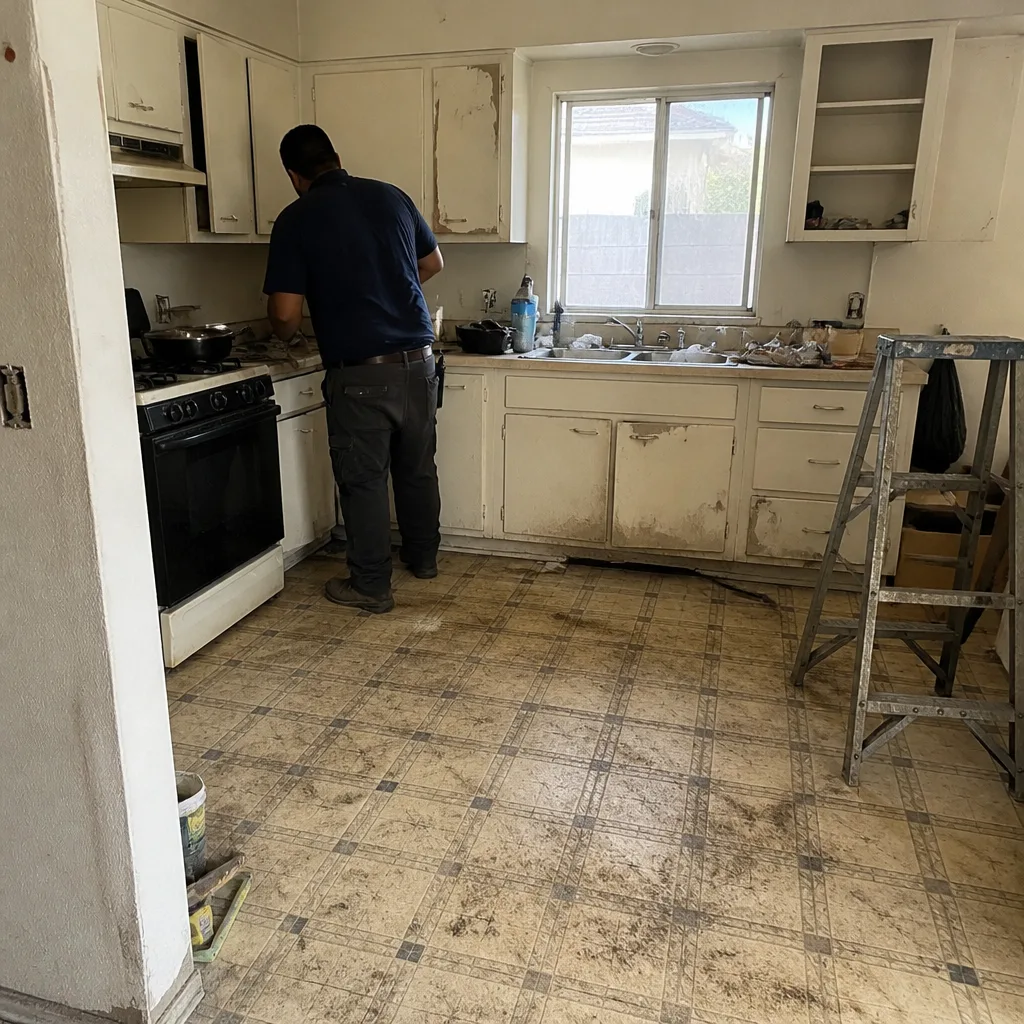 Before
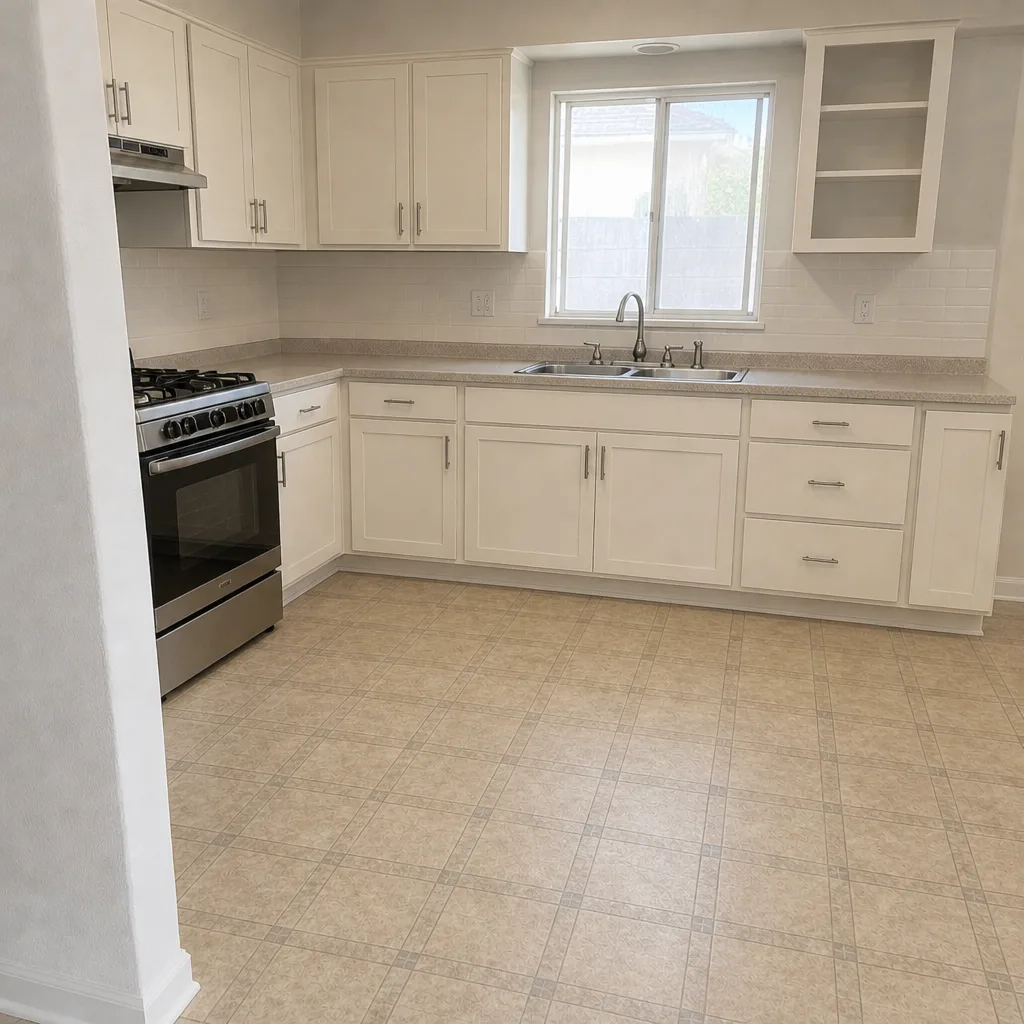 After
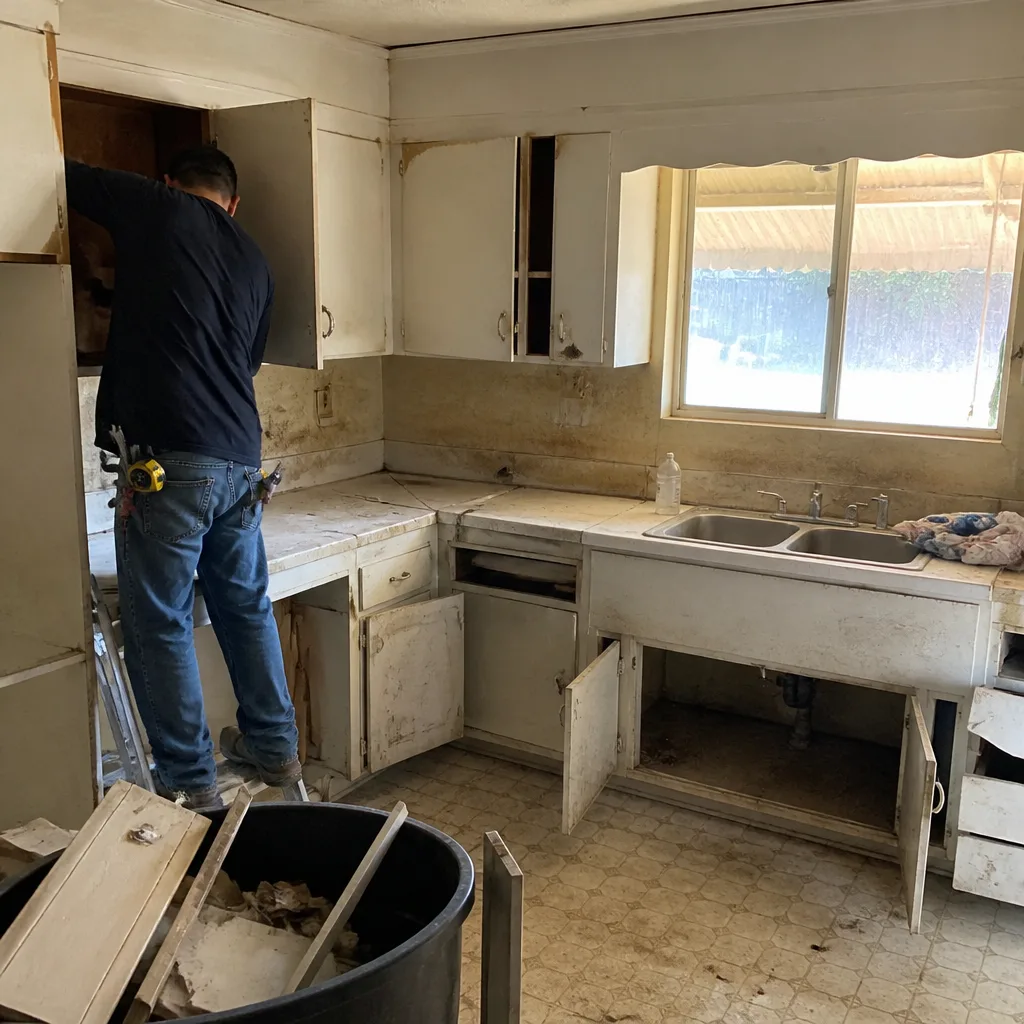 Before
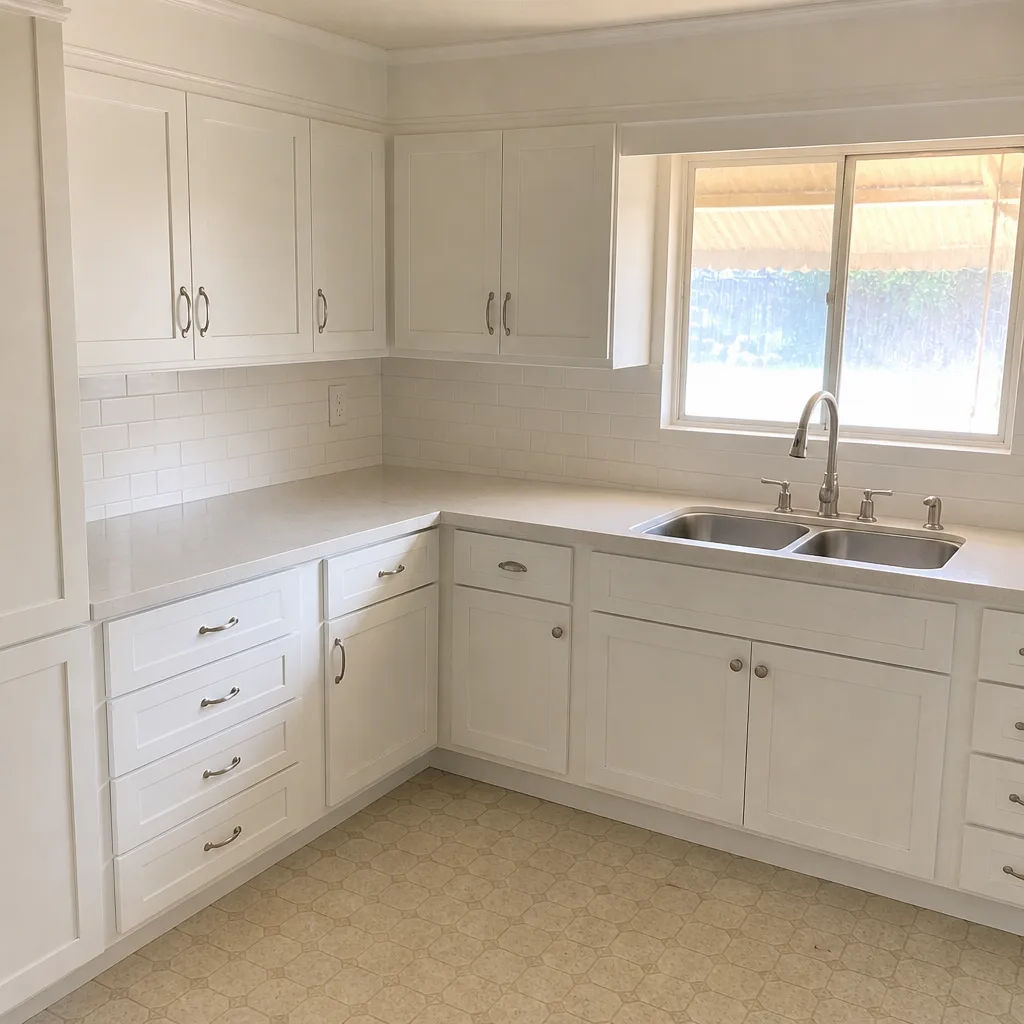 After
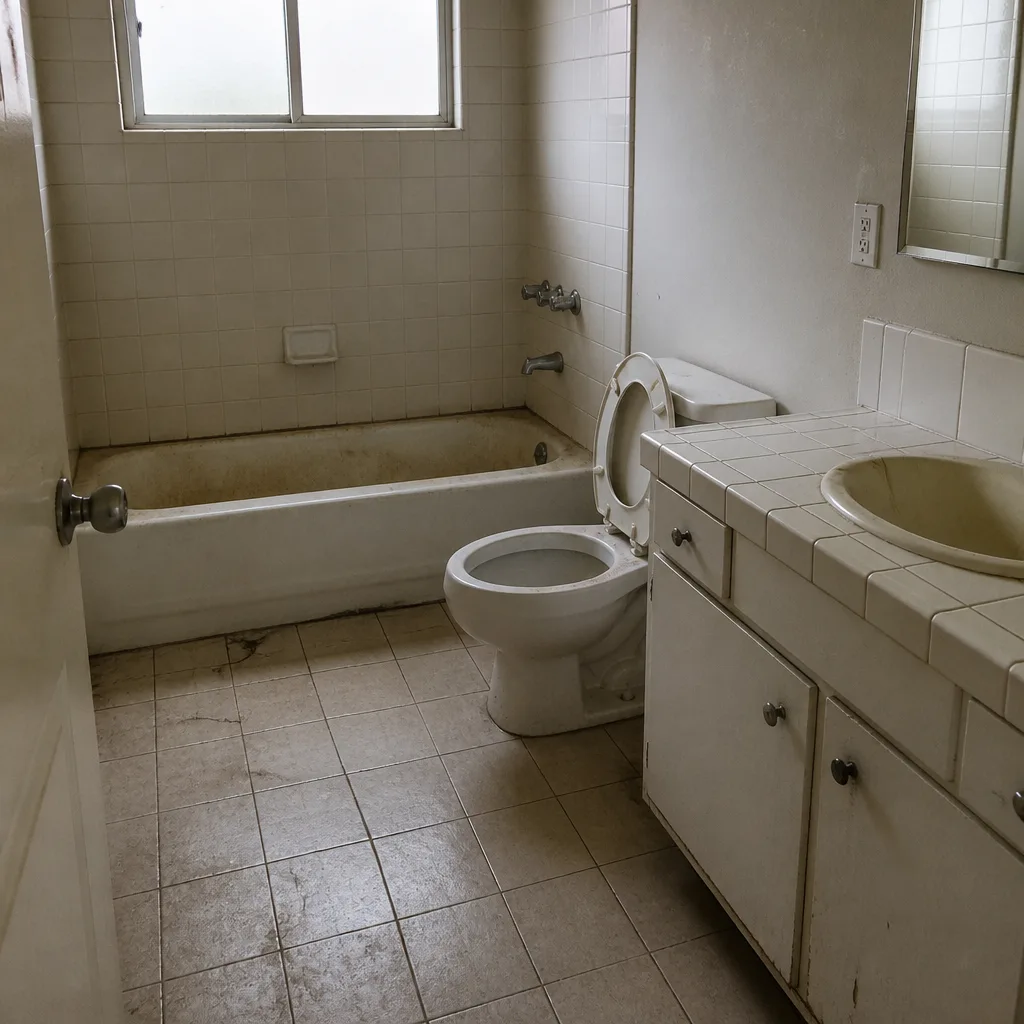 Before
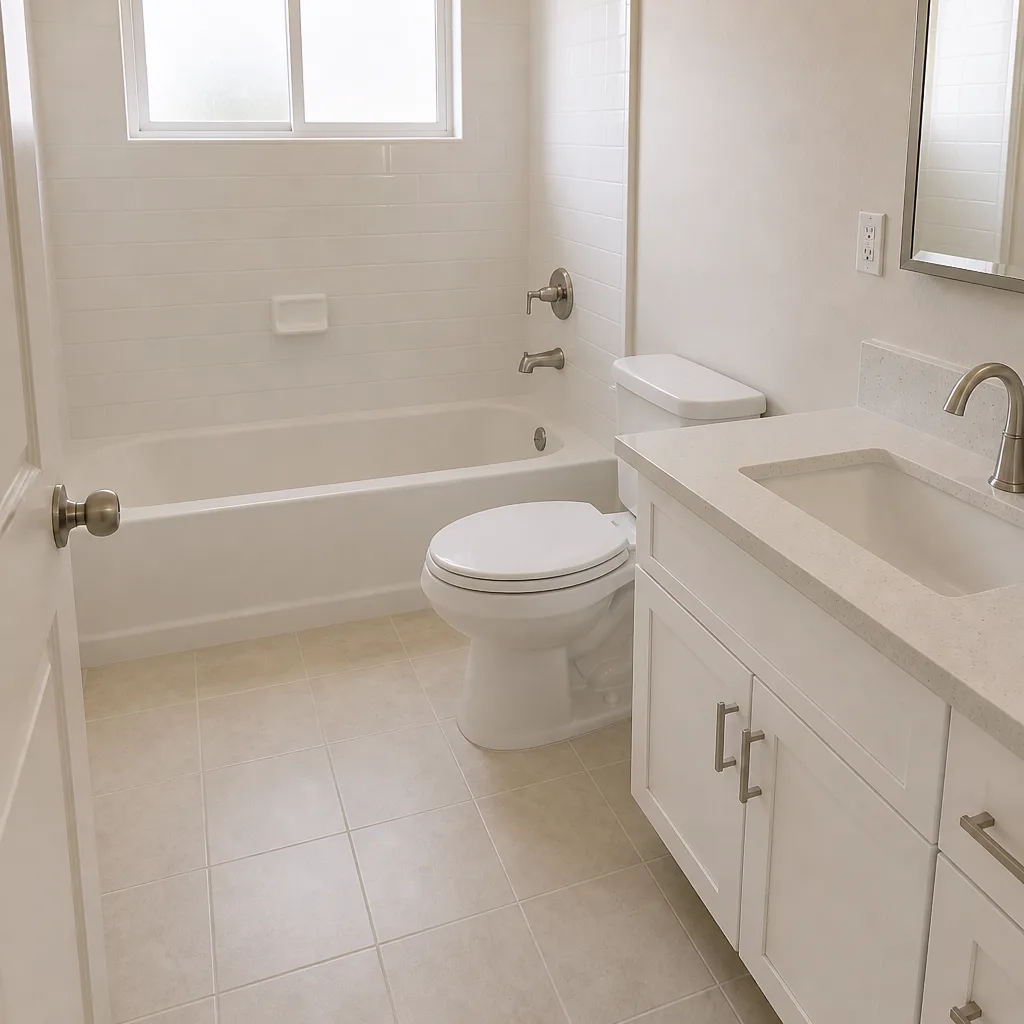 After
When to Call a Professional
Some ADU questions you can answer yourself with the code book and the overlay in hand. Others should go to a professional before you spend money on design. Call a professional if any of these are true: the parcel’s electrical service is 100-amp or you don’t know what it is; the garage you want to convert has a structural question (cracked slab, insufficient framing, a shared wall with the primary structure); the project involves a new sewer lateral, a grading change, or work within a fire-sprinkler trigger; the lot has an HOA overlay that may restrict ADU design; or you’ve received a planset or estimate and you’re not sure whether it’s complete. Each of these is a place where a Santa Ana project either speeds up or slows down, and the cost of a professional review is small against the cost of a correction cycle. Rowan Construction Group Santa Ana offers free estimates in Santa Ana – call (833) 853-5955.
Frequently Asked Questions
A garage conversion runs $60,000 – $120,000, an attached addition $120,000 – $220,000, and a detached new build $180,000 – $320,000 in Santa Ana. The range within each category is driven mostly by site conditions – trenching, panel capacity, sprinkler triggers – more than by finishes. Call (833) 853-5955 for an exact written quote; estimates are free.
California AB 2221 limits the grounds on which Santa Ana can deny a compliant ADU, but the key word is compliant. The city still applies its local overlay for utility connections, fire sprinkler triggers, and parking replacement, and an incomplete application isn’t a denial – it’s an intake rejection, and the state timelines don’t start until it’s complete. Call (833) 853-5955 to have a written estimate reviewed line by line.
A simple garage conversion can clear over-the-counter review in two to six weeks; a detached new build or major addition usually takes three to five months for the first full review cycle, plus four to eight weeks per correction cycle. Budget six to nine months from submittal to permits in hand. Call (833) 853-5955 for a written scope and schedule.
It shouldn’t, if the contract is written correctly. Rowan’s practice is a flat written price and written scope before work begins, with no change proceeding until a change order is signed – the discipline that keeps projects within a few percent of the agreed number. Call (833) 853-5955 to schedule a free estimate, and bring any competitor’s quote for a free second opinion.
Yes. California law requires separately licensed electrical, plumbing, and HVAC contractors for those trades, and each pulls its own permit under its own license. The general contractor manages the schedule and the interface, but the specialty work has to be performed by the classified license holder. Call (833) 853-5955 for a written scope that names every license holder.
Four documents: a signed construction contract with a flat written price and written scope, an approved permit set with permit numbers for each trade, executed subcontractor agreements naming the licensed holder for each trade, and a written change-order protocol stating that no change proceeds without a signature. Missing any of the four is where ADU projects typically stall. Call (833) 853-5955 for a free estimate and a documentation review.
The Bottom Line
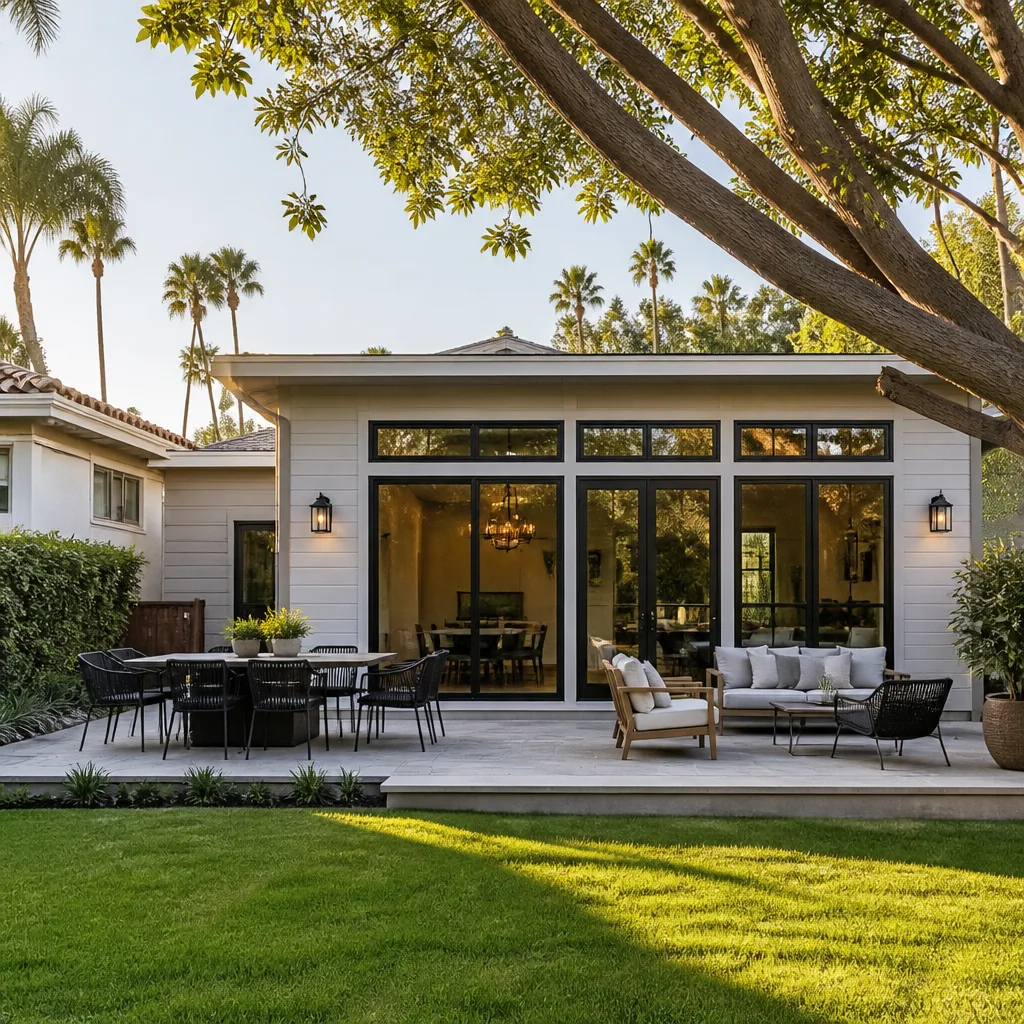
Santa Ana’s ADU rules work in two layers, and the homeowner who understands both spends less and finishes sooner. State law through AB 2221 tells you what the city can’t deny; the local overlay tells you what it still requires at intake. Cost runs $60,000 – $120,000 for a garage conversion, $120,000 – $220,000 for an attached addition, and $180,000 – $320,000 for detached new construction, with site conditions driving the swing. Plan-check moves faster through over-the-counter review for simple conversions and slower through full review for new construction, and the correction cycle is almost always a planset problem, not a city problem. Seven trades, several of them separately licensed, and four documents signed before ground breaks. Get those two things right and the rest of the project behaves.
Ready to price your Santa Ana ADU? Call Rowan Construction Group Santa Ana at (833) 853-5955 for a free estimate. Every project gets a flat written price and written scope before any work starts, a signed change order for any change, a documented photo record on every visit, and the 365-Day Done Right Promise – if it’s not done right, we make it right.
Written by the team at Rowan Construction Group Santa Ana.