Last updated November 18, 2026






Free written scope consultation - allowances, timeline, and change-order rules on paper before a single trade is scheduled
Fence Installation Warning Signs Every Homeowner Should Know
Here’s the counterintuitive part: most fence failures in Santa Ana are decided before the crew digs a single hole. They’re decided in the bid document. A line that reads “wood posts” without a pressure-treatment grade attached to it is a document that legally permits your contractor to sink untreated lumber into the ground – lumber that can rot within two years in Santa Ana’s clay-heavy, seasonally damp soil. We’ve reviewed hundreds of written estimates, and the ones that cost homeowners the most later were never the highest-priced bids. They were the vaguest ones. This guide teaches you to read fence paperwork the way you’d read a building inspection: line by line, looking for the missing specification. By the end you’ll know the phrases that hide cost, the code numbers that matter, and the physical signals during install that tell you the job is going sideways.
Quick Answer
The biggest fence installation warning signs are a bid that omits the post pressure-treatment grade (ground-contact lumber should be rated UC4B minimum), a bid without post depth specified, and contracts containing the phrases “unforeseen site conditions,” “material substitution at equivalent quality,” or “pricing subject to lumber index.” During the build itself, watch for posts set without concrete, panels hung before the concrete has cured, and hardware fastened with deck screws instead of structural screws. Any one of these is a reason to ask questions before work starts – or to walk.
Styles & brands we work with
- Kitchen remodeling
- Bathroom remodeling
- Home additions & ADU
- Roofing
- Windows & doors
- Driveway & pavers
- Fence
Table of Contents
- The Bid Language That Costs You Money
- Why Post Depth Specifications Matter in Santa Ana Soil
- Pressure-Treatment Grades: The Spec Nobody Explains
- The Missing 811 Call Confirmation
- Three Contract Phrases That Shift Risk to You
- Physical Red Flags During Installation
- When a Contractor Can’t Name Their Supplier
- The Documentation to Request Instead
The Bid Language That Costs You Money
A fence estimate is a legal document. What isn’t written in it is permitted. That’s the whole game. When a bid says “approximately 120 linear feet of wood fence, posts included,” it has told you nothing about the post species, the treatment level, the depth below grade, the concrete volume, the fastener type, or the finish. It has also given the contractor enormous latitude – latitude they’ll use on a fixed-price job to protect their margin when the lumber quote moves.
We’ve seen bids in Santa Ana that fit on a business card. We’ve also seen what happens two winters later when those fences begin to lean. The pattern is consistent.
A bid worth signing should specify, at minimum:
- Linear footage, post spacing, and post count as separate line items
- Post species and pressure-treatment rating, stated by name
- Post depth below grade, in inches
- Concrete specification and volume per post
- Rail, picket, and cap dimensions in nominal inches
- Fastener type – galvanized, stainless, structural screws
- A named manufacturer or supplier for manufactured components
- Whether permits are pulled and by whom
If the number is flat but the scope is vague, the price isn’t real. Under Clause 1 of The Haven Standard, a written price and a written scope are delivered together before any work begins – a scoped line-item that names the material, not a paragraph that describes the vibe. If you’d like to see what that looks like on paper, the team at our Rowan Construction Group Santa Ana home page outlines the standard. When comparing bids, ask yourself: could two different crews read this document and build two genuinely different fences? If yes, the bid is the warning sign.
Why Post Depth Specifications Matter in Santa Ana Soil
Santa Ana code requires fence posts to be embedded to a depth of at least one-third of the post’s above-grade length. A six-foot post, in other words, needs roughly two feet buried – and typically three or more with the concrete footing. It sounds technical. It matters because post depth is the single most common place a contractor saves hours on a fixed-price job, and the failure shows up slowly.
Why is this a Santa Ana problem specifically? The city sits on a mix of alluvial soil and clay that retains moisture through the cool, marine-influenced winter – the same marine layer that rolls in off the coast and keeps the ground damp well into spring. Shallow posts in that soil heave and tilt. A fence installed by a crew aiming for speed may bury posts just 18 inches into the ground, skip the concrete entirely, or backfill with the excavated dirt. It looks straight on install day. Then the first wet winter arrives, and one by one the posts begin to lean toward the property line.
Here’s what to ask, in plain terms:
- “How deep will the posts be set, and how much concrete per hole?” – A specific number in inches and in bags is a good sign. “Standard depth” is not an answer.
- “Will you hit any root systems or existing hardscape?” – Look for the answer in writing, not conversation.
- “How will you handle a sloping grade?” – A crew that shrugs and says “we’ll figure it out” is telling you they haven’t measured the run.
- “How soon after setting can panels be hung?” – The correct answer respects concrete cure time; an impatient one doesn’t.
The record is what you want here. We include a documented photo record on every visit, so you can see the depth markers before the holes are filled. Ask any contractor you hire to do the same. If they can’t, that’s the warning sign.
Pressure-Treatment Grades: The Spec Nobody Explains
A bid that reads “wood posts” without a pressure-treatment grade is a bid that legally allows the contractor to bury untreated lumber in your yard. The American Wood Protection Association grades treated lumber by exposure: UC4A covers general ground contact, but UC4B is the grade intended for heavy-duty, structural ground-contact use, including fence posts in damp soil. In Santa Ana, where posts stay in contact with moisture for months, the difference between a correctly graded post and its cheaper substitute is the difference between fifteen years and two.
We specify the grade in writing because the material is the promise. It’s one reason we source from a deep catalog of vetted suppliers, and it’s why we don’t quote “wood” as a category. If a contractor’s material list mentions pressure treatment but not the exposure rating, ask directly: “What’s the UC rating on those posts?” A professional will answer in one sentence. A contractor who hasn’t sourced the material will reach for “it’s the good stuff.”
The same principle applies to manufactured fencing. If you’ve chosen a Belgard or Techo-Bloc masonry fence system, an Unilock or Tremron panel system, or any name-brand product, the bid should name the exact model and color. “Pavers” is not a specification. A model number is.
The Missing 811 Call Confirmation
Before any crew digs in Santa Ana, a call to 811 – the national utility marking service – should have been made, and the confirming ticket should be available on request. That ticket documents the utility locate and protects the property owner from liability if a line is struck. A contractor who skips the call is a contractor who has exposed you to a repair bill for a private irrigation line, a low-voltage landscape circuit, or worse.
This is one of the easiest warning signs to check, and one of the most overlooked. Ask for the 811 ticket before the posts go in. Any competent contractor will have it within minutes. A contractor who says “we know this neighborhood, there’s nothing buried here” is not demonstrating knowledge – they’re demonstrating that they don’t treat utility marking as a legal obligation.
It’s also a good calibration test. We’ve watched crews work on both sides of this line, and the ones who skip the call tend to skip other steps too: the concrete volume check, the moisture test on lumber, the cut sheet gathering. It’s not one error. It’s a pattern.
Three Contract Phrases That Shift Risk to You
These three phrases show up in fence contracts across Southern California, and each one does the same job: it transfers cost from the contractor to you. Read your contract until you find them – or confirm they’re absent.
1. “Unforeseen site conditions.” Buried roots, old footings from a previous fence, rock, or debris should be priced in the estimate when the contractor has walked the property. When the phrase appears in a contract without a written price cap, the contractor has reserved the right to charge more once the digging starts. Fix: require a written inspection of the site, and if anything is genuinely unknown, negotiate a capped per-foot rate for it.
2. “Material substitution at equivalent quality.” This allows the contractor to install a different product than the one specified, at their discretion, as long as they judge it “equivalent.” Fix: require any substitution to be approved in writing before it happens, with the model numbers of both products listed.
3. “Pricing subject to lumber index.” This is a floating-price clause. It means the number you agreed to can move with the market – only upward, in practice. Fix: require a firm fixed price with a stated validity period, and if the contractor can’t offer one, that’s information you should have before the job starts.
The administrative discipline that protects you here is simple: no work proceeds on a change until the change order is signed. Under The Haven Standard, a change is only real once it’s on paper – both parties, both signatures. Insist on the same. If a contractor balks at the signed-change-order rule, that’s their answer.
Physical Red Flags During Installation
The paperwork is the first place to look, but the build itself tells a story too. Stand outside and watch the work for ten minutes. You don’t need to be a tradesperson to spot these.
- Posts set without concrete. Look for excavated dirt being backfilled, or a bare post standing in a loose hole. Concrete should be visible or documented at every post; you can ask to see the bags.
- Panels installed before concrete cure. Concrete needs time to set before rails and panels hang. A crew that races past this step builds a fence that will be plumb on day one and out of alignment by spring.
- Deck screws used for rail brackets. Deck screws are designed for decking, not structural joinery. Rail brackets should be fastened with structural screws rated for lateral load. Look at a bracket and check the head marking.
- Posts set by hand without a depth check. A tape measure should be visible at every hole. No measure, no proof.
- Pickets spaced by eye. Spacing should be set with a jig or a spacer; eyeballing produces a fence that drifts.
- No weather sealant applied at grade. Terminations and ends need protection from standing moisture.
If you’ve already sourced a paving or masonry schedule for a Driveway & Pavers in Santa Ana project, you already know what a professional crew’s site discipline looks like. Expect the same on a fence: organized material staging, a tape measure at the trenches, and a foreman who can answer the depth question on request.
When a Contractor Can’t Name Their Supplier
Ask the contractor who’s supplying the posts and panels. A professional answers within a sentence and names the manufacturer or the supplier. A contractor who can’t, or hedges with “various sources,” has a material risk you don’t want underwriting.
The document to request is a cut sheet – the manufacturer’s spec sheet for the specific product line being installed. It lists the pressure-treatment rating, the nominal dimensions, the finish warranty, and the intended use. A cut sheet is not a sales brochure; it’s the manufacturer’s own statement of what the product is rated to do. If a contractor can’t produce it before the job, ask for the model name and expect to find it yourself.
For manufactured components – panels, caps, decorative posts – the cut sheet is also your warranty link. If the product later fails, the manufacturer’s documentation is what stands between you and a replacement bill. We keep cut sheets on file for every material we quote, because a written price is only as good as the written product behind it. The material depth matters when you’re talking about a fence installation in Santa Ana where a contractor has to honor a spec across a long, graded run of property line.
The Documentation to Request Instead
You now know what to avoid. Here’s the counterpart – what a professional fence bid in Santa Ana should look like on your desk before you sign.
- A written flat price with a validity period, not a “call for a quote.”
- A written scope that specifies species, treatment grade, post depth, concrete volume, fastener type, and dimensions.
- Named manufacturer models for every manufactured component, with cut sheets available.
- A statement on permits: who applies, who pays, who’s responsible for inspections passing.
- A written workmanship warranty – not a verbal promise, and not an asterisk.
- A signed-change-order rule: no change in scope is finalized until both parties sign.
- An 811 ticket number before work begins.
The 365-Day Done Right Promise we offer is backed by a documented terms page, not a handshake. Every written quote we deliver includes a written warranty and a written scope assembled line by line, and we’ll review a competing estimate against that same checklist for free – it’s the free second opinion we offer on any written estimate. This is the same discipline we apply to home additions and ADUs, where a poorly scoped change can cost five figures. You can see the full standard on our Home Additions & ADU in Santa Ana page.
Common Mistakes to Avoid
- Accepting a bid that says “posts” without a grade. It’s the single most expensive single-word omission in a fence contract, and it’s the exact rule that decides whether your posts last two years or fifteen in Santa Ana’s damp clay soil.
- Signing before you’ve read the change-order clause. The risk-transfer phrases live in the fine print. Find them, or confirm they’re absent, before you sign.
- Skipping the 811 call to save a week. The locate ticket exists to protect you, and the delay is measured in days, not months. Skipping it can cost a repair bill.
- Choosing the lowest bid without comparing scope. A bid that lists less material isn’t cheaper; it’s a different fence. Compare line items, not bottom numbers.
- Ignoring the post-depth question because it feels technical. “One-third of the post length below grade” is a sentence you can say out loud. Say it to every contractor you interview.
- Hanging panels before concrete cures. If you see panels going up within hours of setting the posts, that’s a structural problem waiting for its first winter.
- Skipping the cut sheet for branded components. For a Belgard or Tremron system, the cut sheet is your warranty. Ask for it before the job.
See the difference
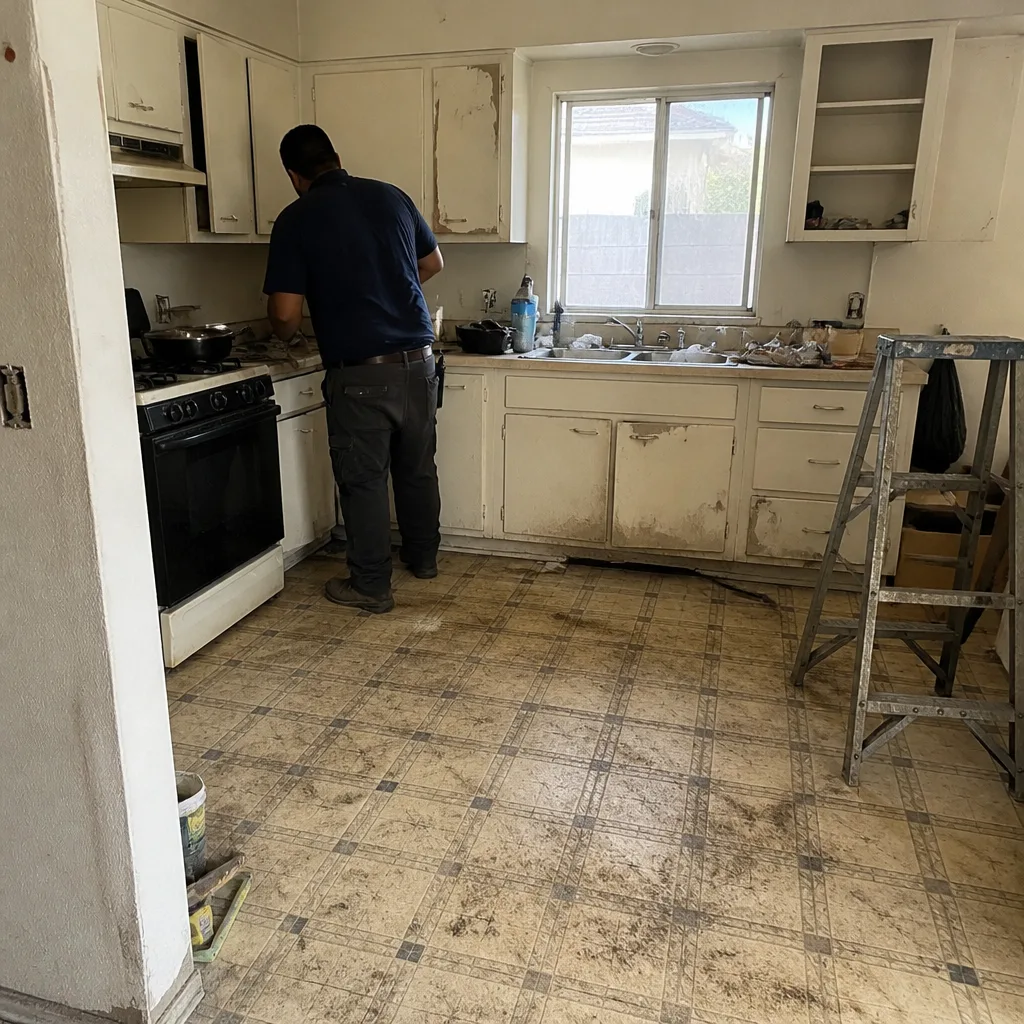 Before
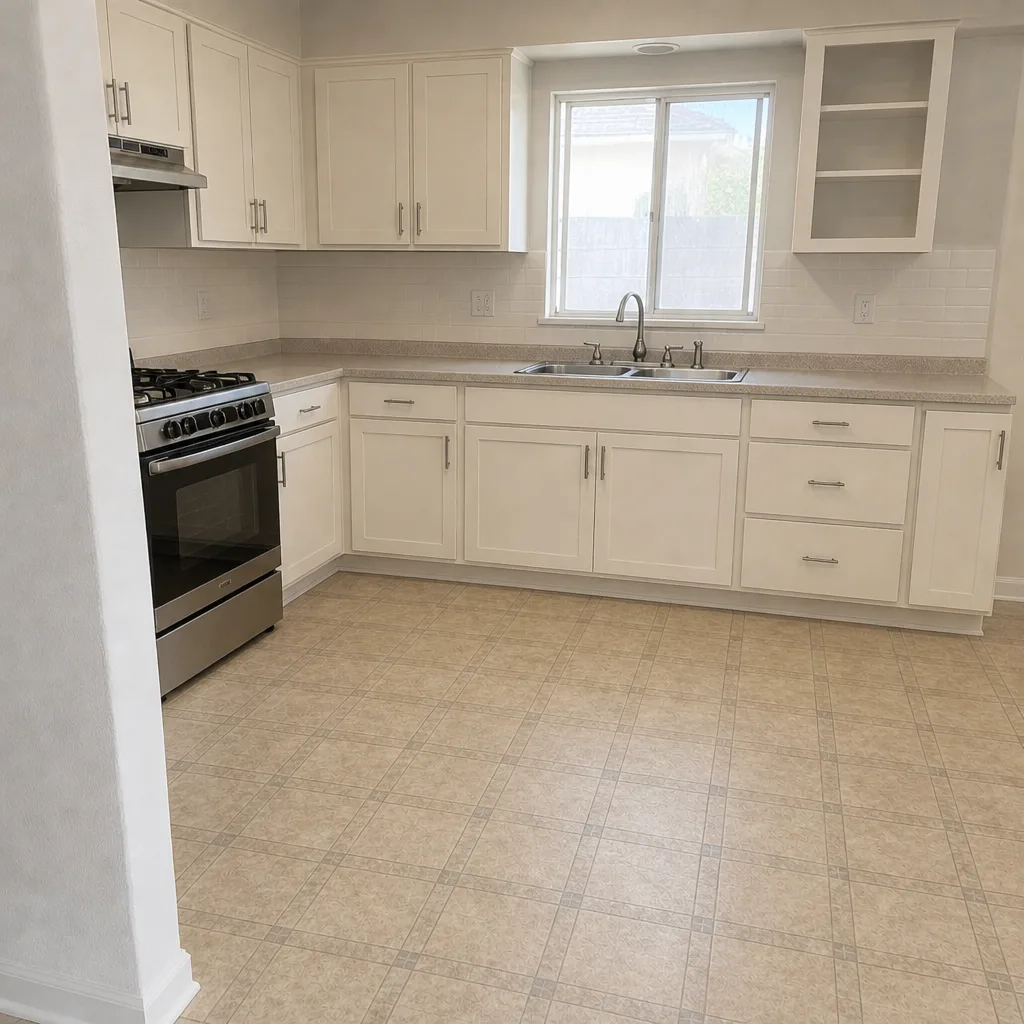 After
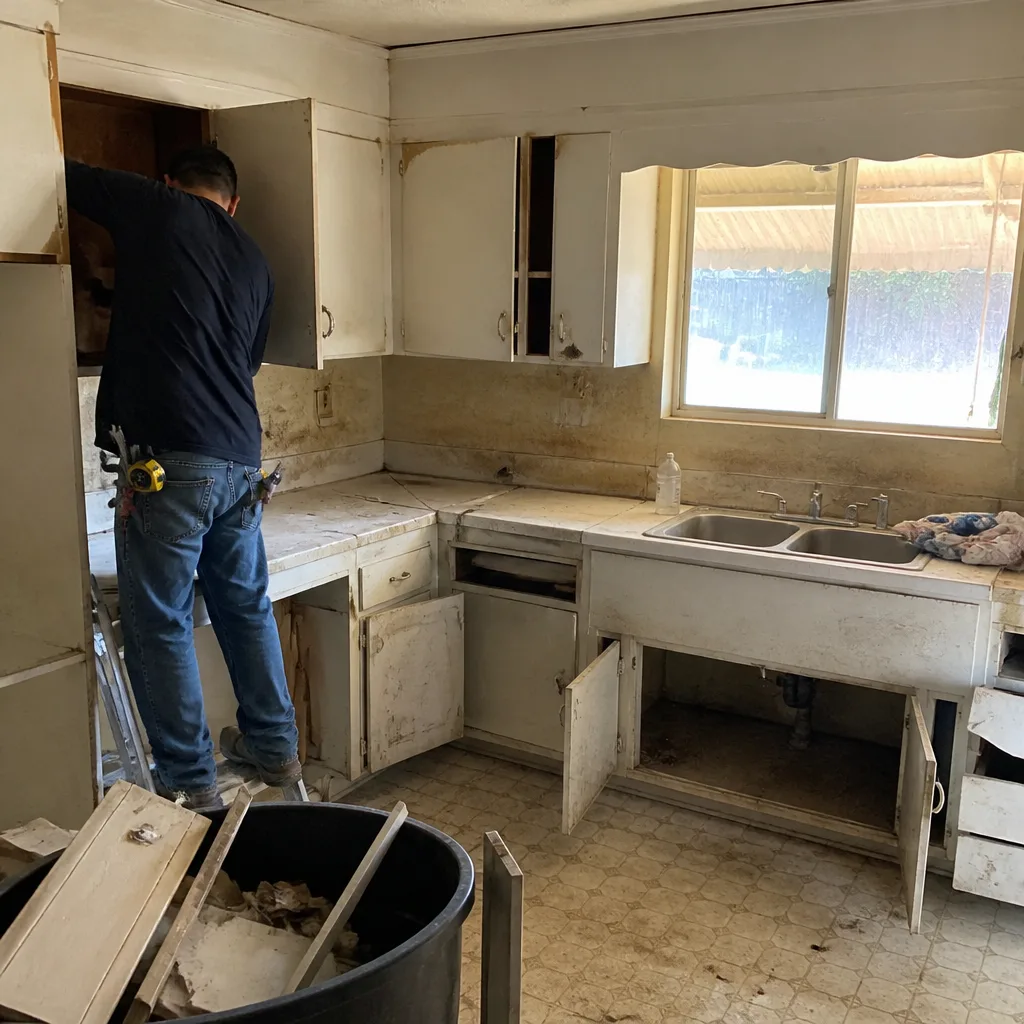 Before
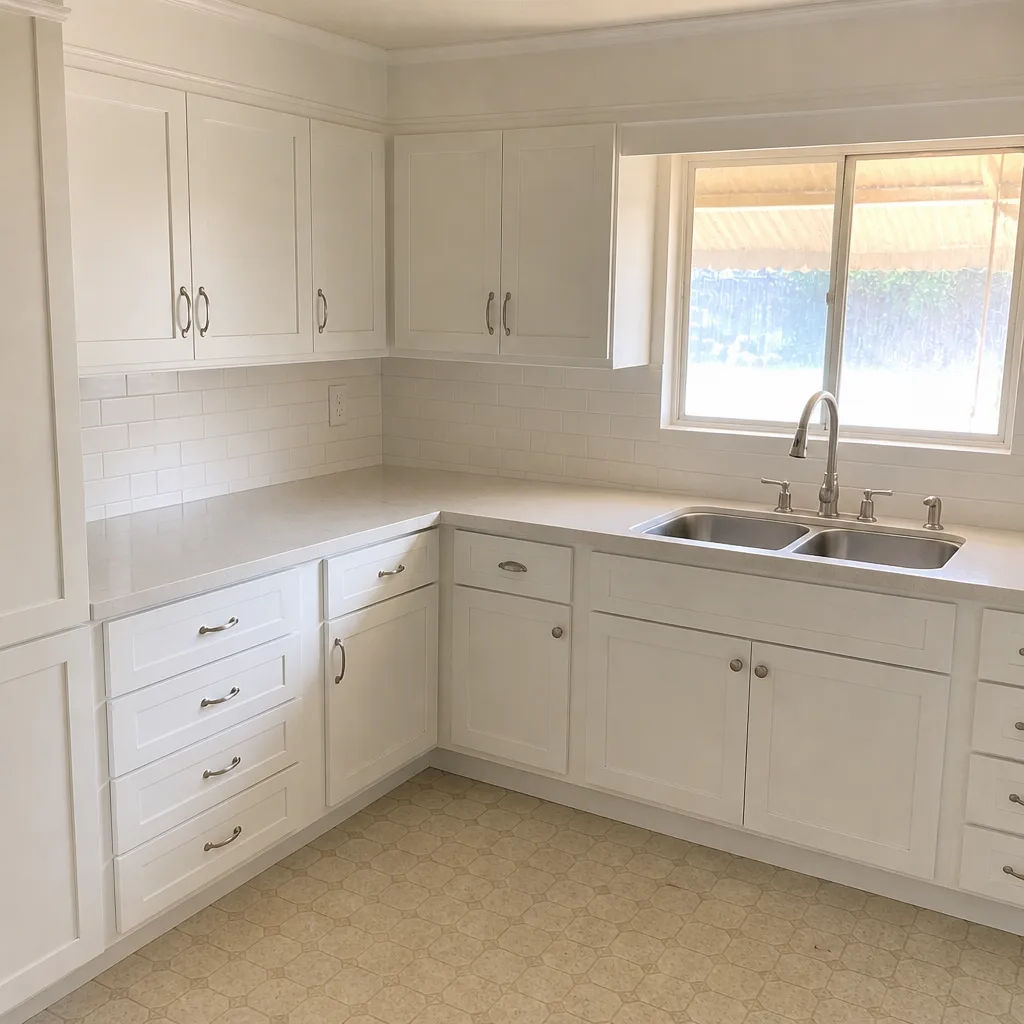 After
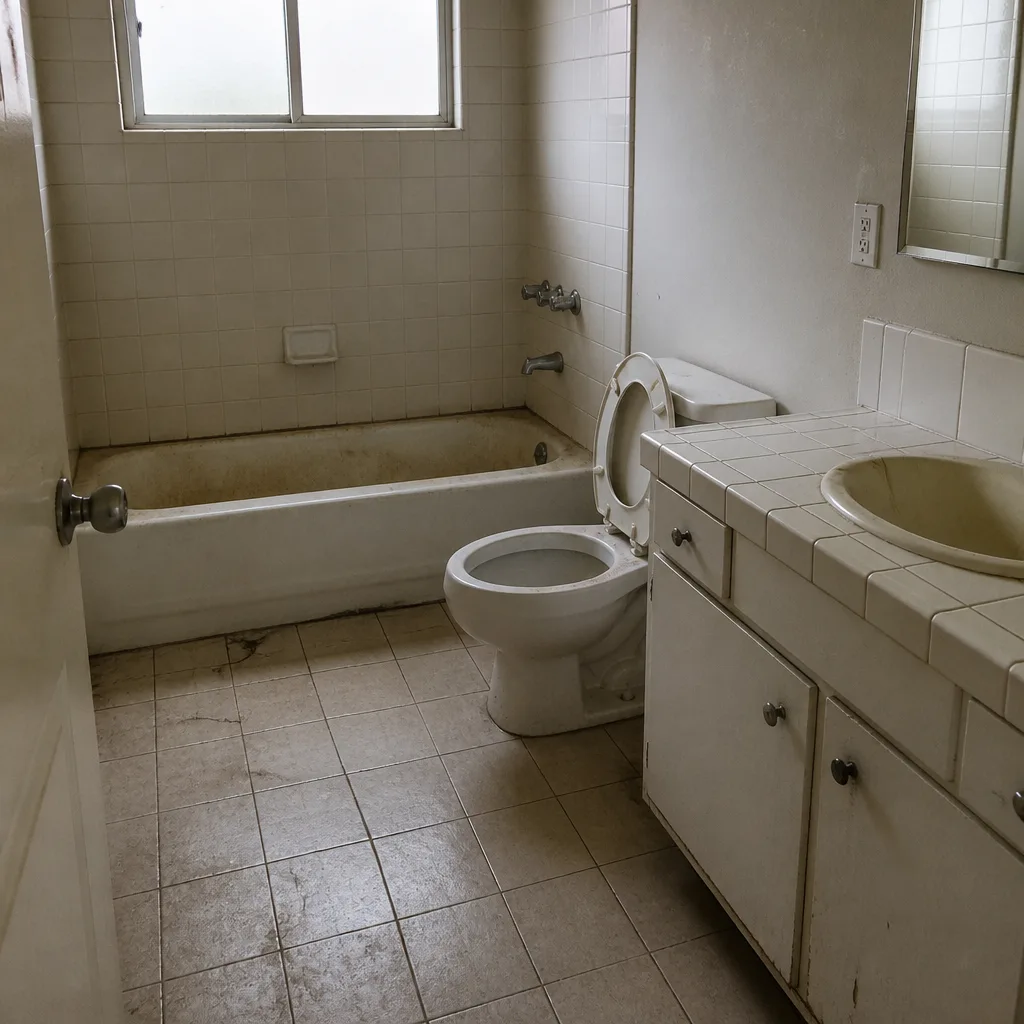 Before
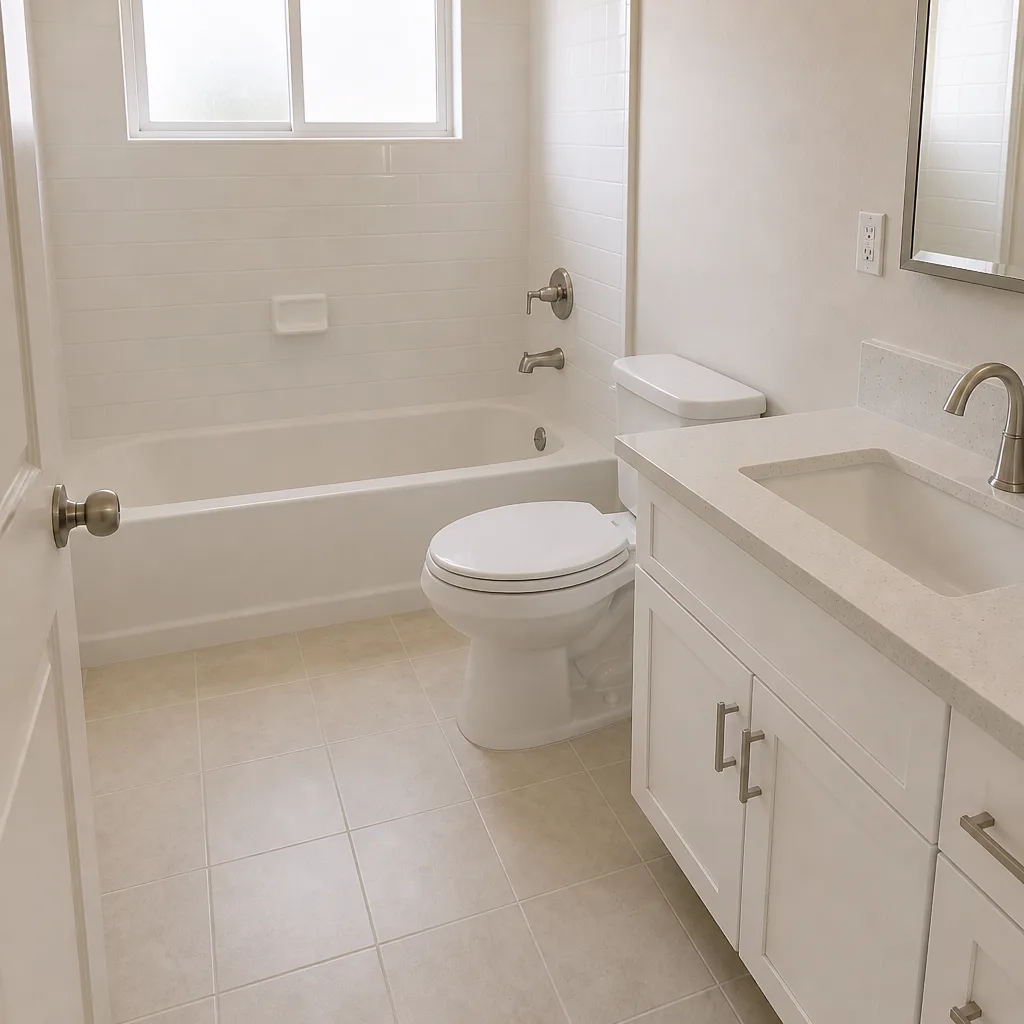 After
When to Call a Professional
Call a professional if any bid you’ve received omits the post treatment grade or the post depth, if the contract contains any of the three risk-transfer phrases without a written cap, or if a contractor can’t name their material supplier or produce a cut sheet. Call for a second opinion if your bid is signed but the scope still feels vague; a line-by-line review takes minutes and clarifies the gap. Rowan Construction Group Santa Ana offers free estimates in Santa Ana – call (833) 853-5955 – and we’ll review any written estimate you bring at no charge. If your current crew is on site and you’re seeing posts backfilled without concrete, panels hung before cure, or deck screws in rail brackets, stop the work and ask for the documentation. It’s better to pause for a day than to repair a fence for a season.
Frequently Asked Questions
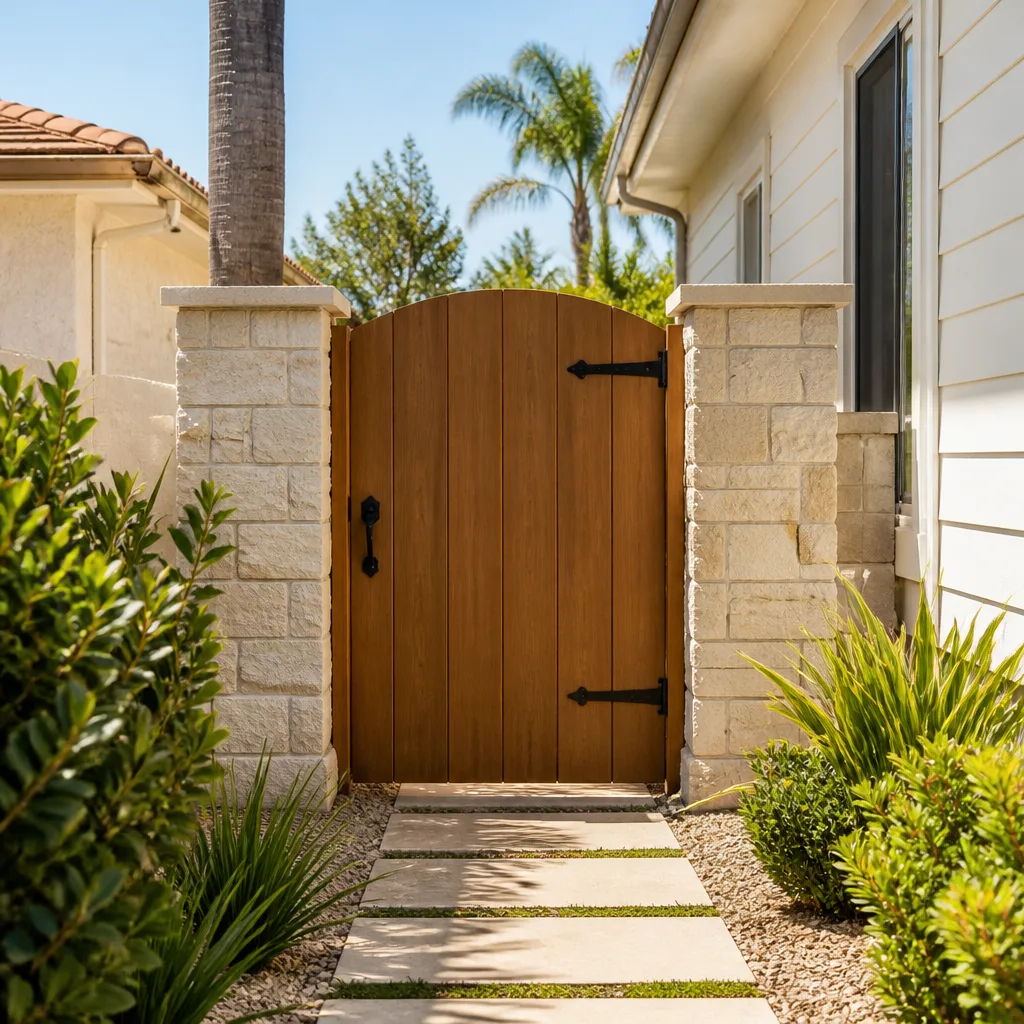
The most common warning sign is a bid that lists “wood posts” without a pressure-treatment grade. A post intended for ground contact should carry a UC4B rating for structural, heavy-duty ground-contact use; a bid without the grade gives the contractor the option of installing untreated or lighter-treated lumber that can rot within two years in Santa Ana’s soil.
Yes. Santa Ana code requires fence posts to be embedded to a depth of at least one-third of the post’s above-grade length, and in practice that means roughly two feet or more below grade for a six-foot fence, with concrete footings. Ask any contractor to state the depth in inches, in writing, before you sign.
“Unforeseen site conditions” is a contract clause that lets the contractor charge more if they encounter roots, rock, or old footings after work starts. If the contractor has walked the property, those conditions should have been priced into the estimate. If the phrase appears without a written per-foot cap, the clause transfers the risk of any surprise cost to you.
The 811 call is the request for utility marking, and the resulting ticket documents that the contractor located underground lines before digging. Skipping it exposes you, the property owner, to a repair bill if a private irrigation line or landscape circuit is struck. Always ask for the ticket before work begins.
Look at your rail bracket screws. Structural screws rated for lateral load have a manufacturer’s head marking and a heavier shank; deck screws are thinner and were designed for decking, not structural joinery. Ask your contractor to name the fastener type in writing, and be wary of “whatever’s on the truck.”
You can, but only by comparing line items instead of bottom numbers. Two bids with different treatment grades, post depths, concrete volumes, and fastener specifications aren’t the same fence, so a lower total doesn’t mean lower cost. Bring a competitor’s bid to Rowan Construction Group Santa Ana for a free line-by-line review – call (833) 853-5955, and we’ll show you where the scopes differ.
The Bottom Line
A fence is a fifteen-year decision, and the paperwork is where that decision is made. The warning signs that matter most – a missing treatment grade, an undefined post depth, a floating lumber-price clause, a missing 811 ticket – all appear before the first hole is dug. Read the bid like a specification, demand the cut sheets, insist on the signed-change-order rule, and watch the site for concrete, cure time, and structural fasteners. If a contractor can’t provide these, you have your answer. The documentation is the product. The fence is what follows. Written by the team at Rowan Construction Group Santa Ana. Call (833) 853-5955 for a free estimate.
Written by the team at Rowan Construction Group Santa Ana.