



Free written scope consultation - allowances, timeline, and change-order rules on paper before a single trade is scheduled
Styles & brands we work with
- Kitchen remodeling
- Bathroom remodeling
- Home additions & ADU
- Roofing
- Windows & doors
- Driveway & pavers
- Fence
See the difference
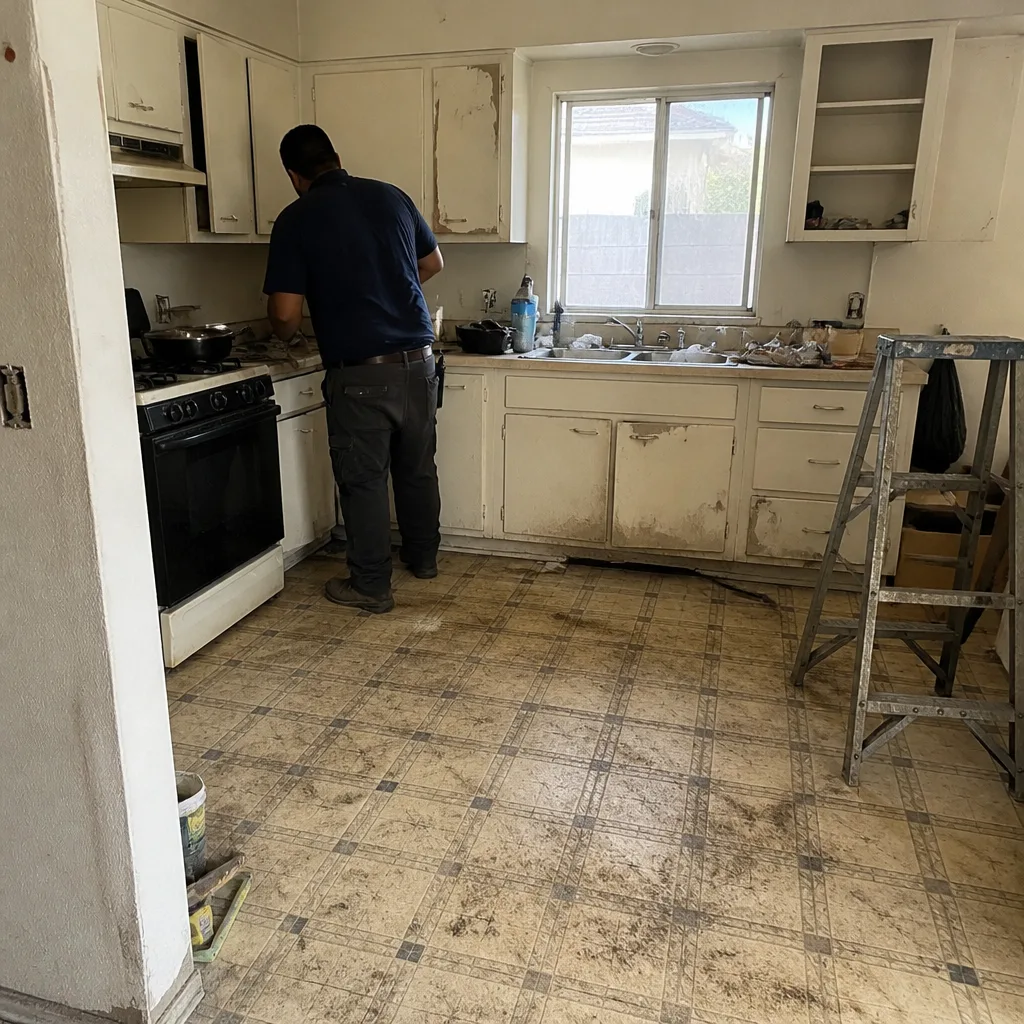 Before
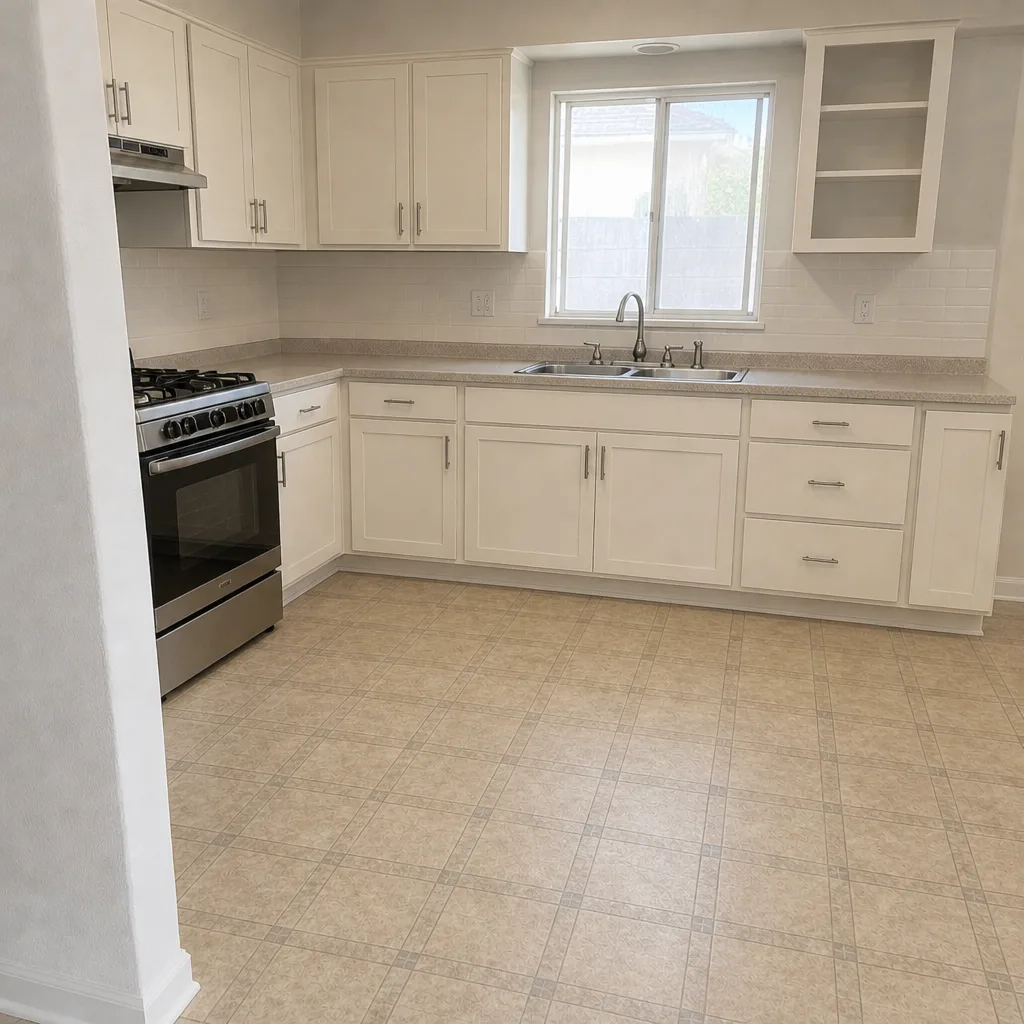 After
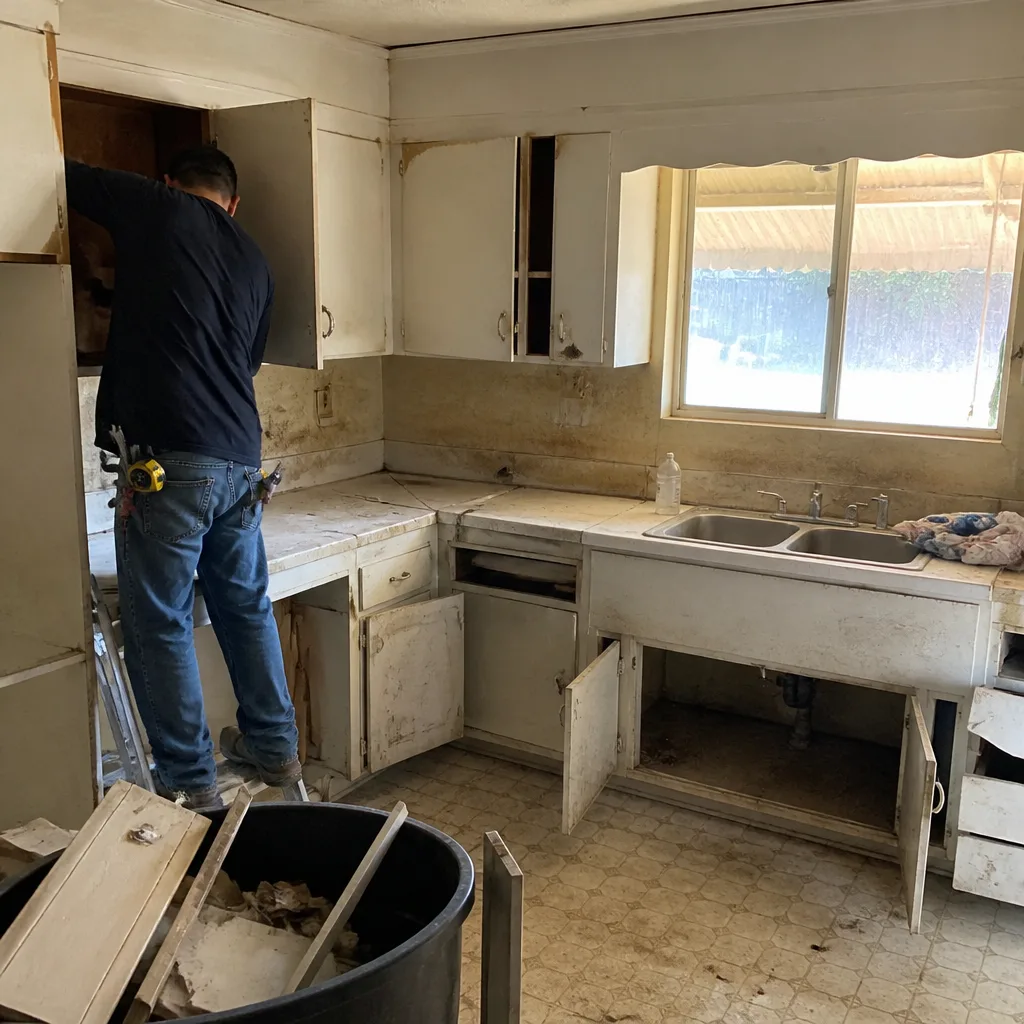 Before
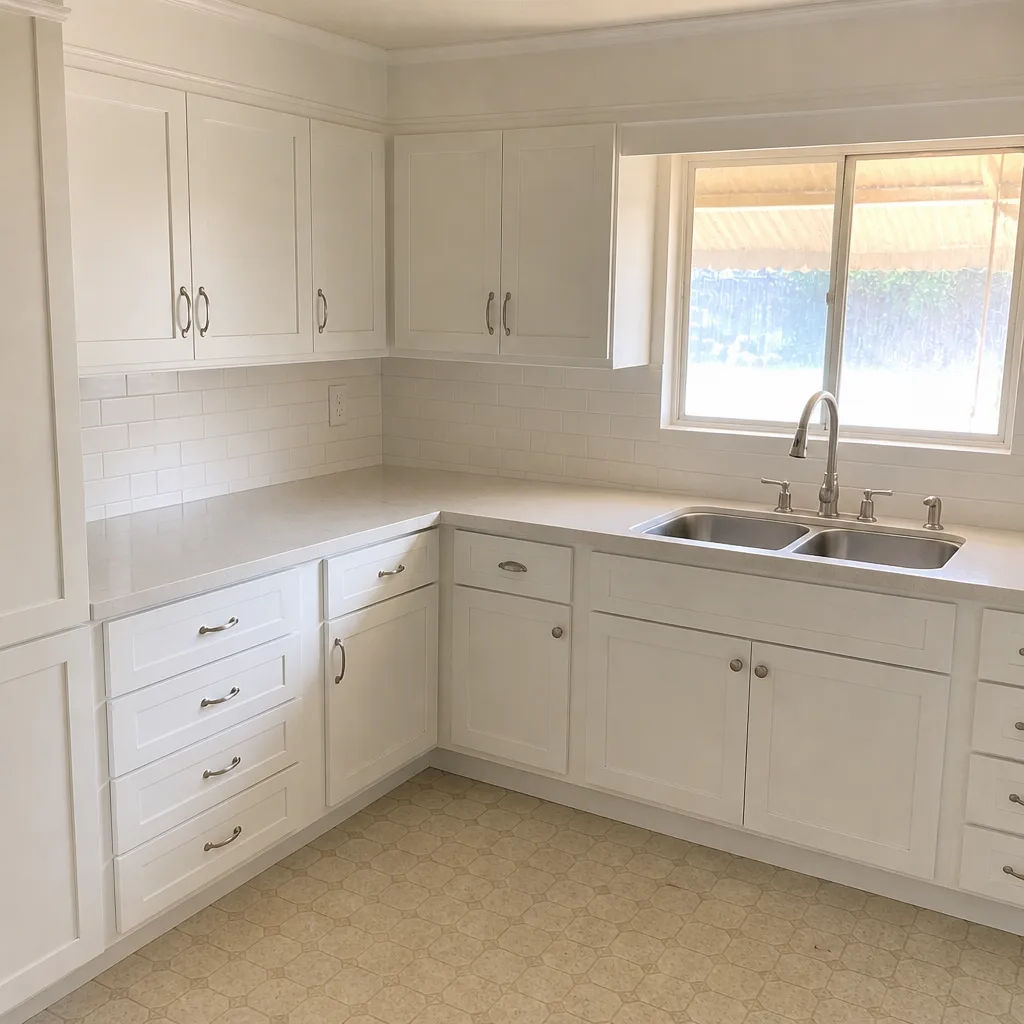 After
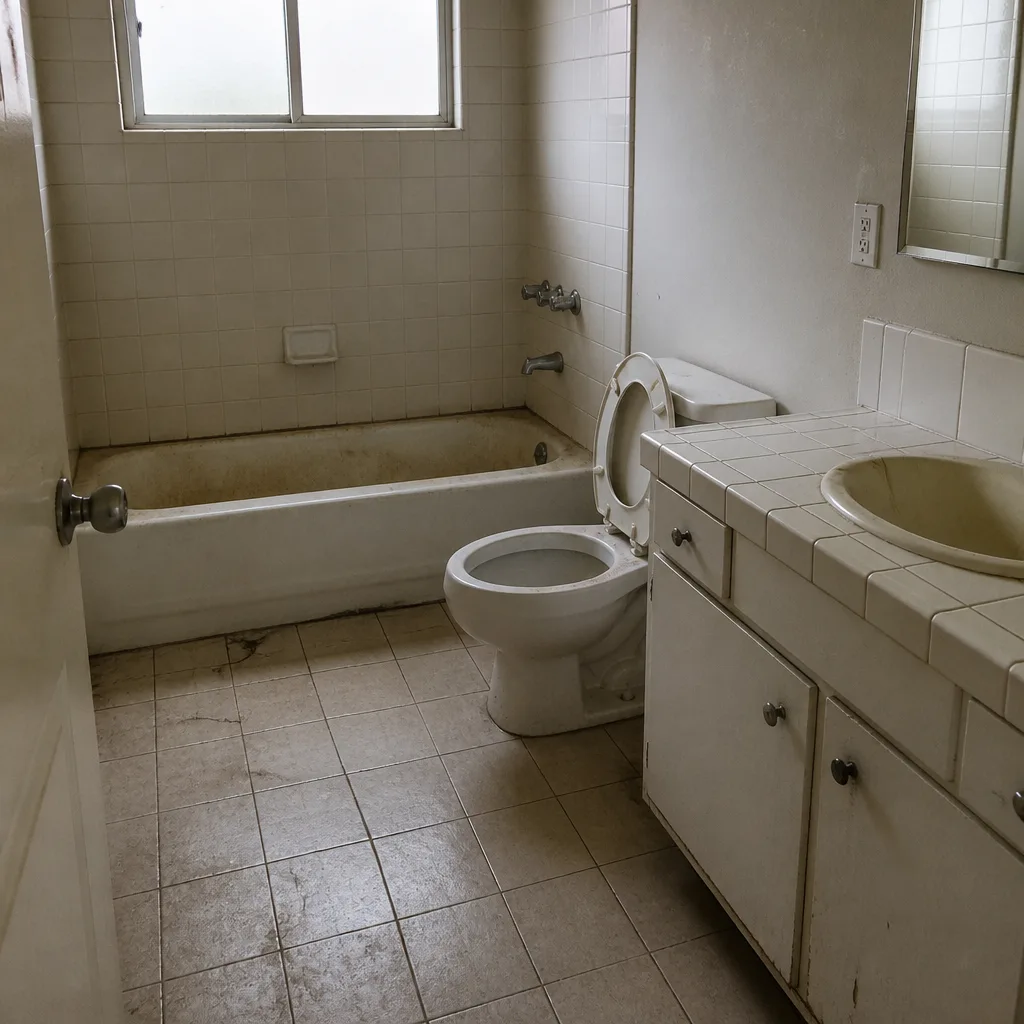 Before
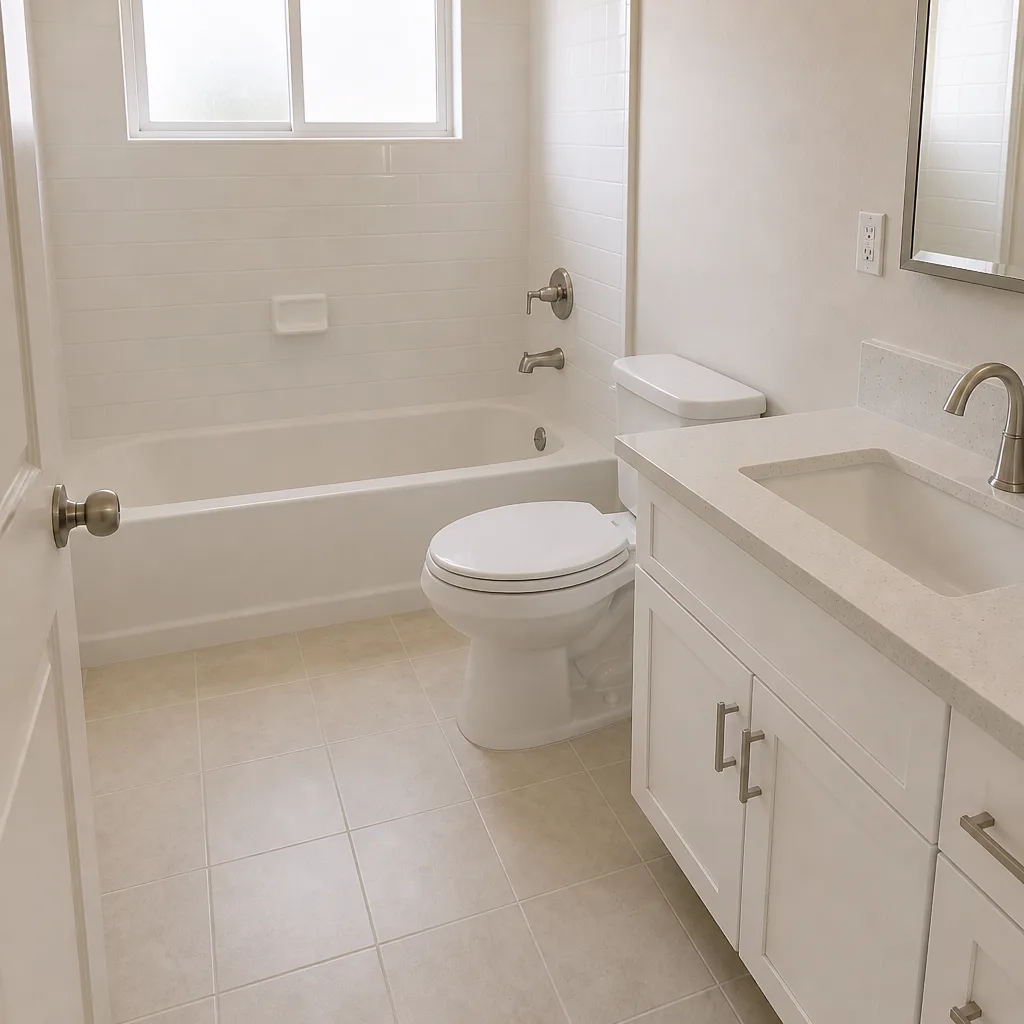 After
General Contractor vs Handyman in Santa Ana, CA: Choose a Handyman Only for Cosmetic Work Under $500
If you’re weighing a handyman vs a licensed general contractor in Santa Ana, here’s the honest line: hire a handyman for cosmetic fixes, picture hanging, and small repairs where labor and materials together stay under $500. Hire a licensed general contractor for anything structural, electrical, plumbing, or permitted. That isn’t a sales pitch, it’s California law. The real risk isn’t a stop-work order on a job, it’s a title defect that follows the house to closing. Call Rowan Construction Group Santa Ana at (833) 853-5955 and we’ll tell you plainly which side of that line your job falls on.
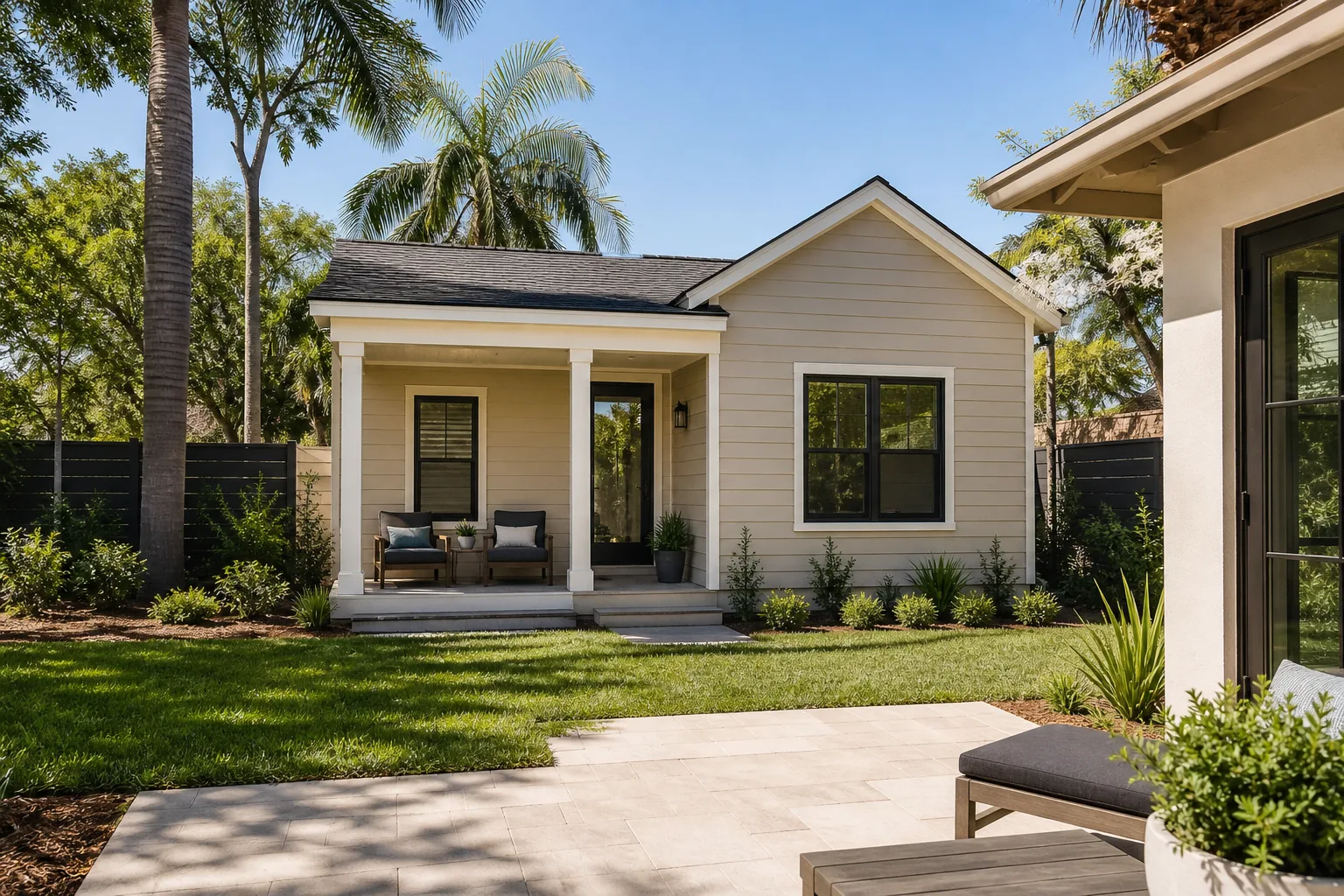
Why the Handyman Decision in Santa Ana Is Really a Liability Decision
The most common question we hear isn’t about licensing categories. It’s a version of this: “Can’t I just have a handyman do it cheaper?” The answer depends less on skill than on what happens if something goes wrong, or what happens when you sell. In Santa Ana, with a housing stock full of 1910s to 1950s bungalows and Craftsman cottages, that question comes up constantly.
A handyman who replaces a load-bearing header in a downtown Craftsman without a permit doesn’t just risk a stop-work order. He creates a record of unpermitted work the owner has to disclose at sale, or remove and redo at their own cost. We’ve seen this play out at roughly three times the original job price once an inspector and a real estate attorney are involved. On the narrow lots near Lacy, where rear-alley garages are being flipped into ADUs faster than permits can keep up, figuring out which existing walls were built legally is often the first job on the site.
What California Law Actually Says About Handyman Work
Under California Business and Professions Code §7048, a handyman without a contractor’s license is limited to jobs under $500 in combined labor and materials, and the work can’t require a building permit. That cap is real, though plenty of homeowners have never heard of it. Anything over that threshold, or any job needing a permit, requires a licensed contractor. When you book a handyman for a job that crosses the line, you may be hiring into an illegal arrangement without knowing it.
There’s a second gap most people don’t consider. A licensed general contractor carries a California Contractors State License Board bond of at least $25,000, general liability insurance, and workers’ comp. When a handyman’s helper falls off a ladder on your property, the only coverage in play is often your homeowner’s policy. That’s not a small footnote in the decision.
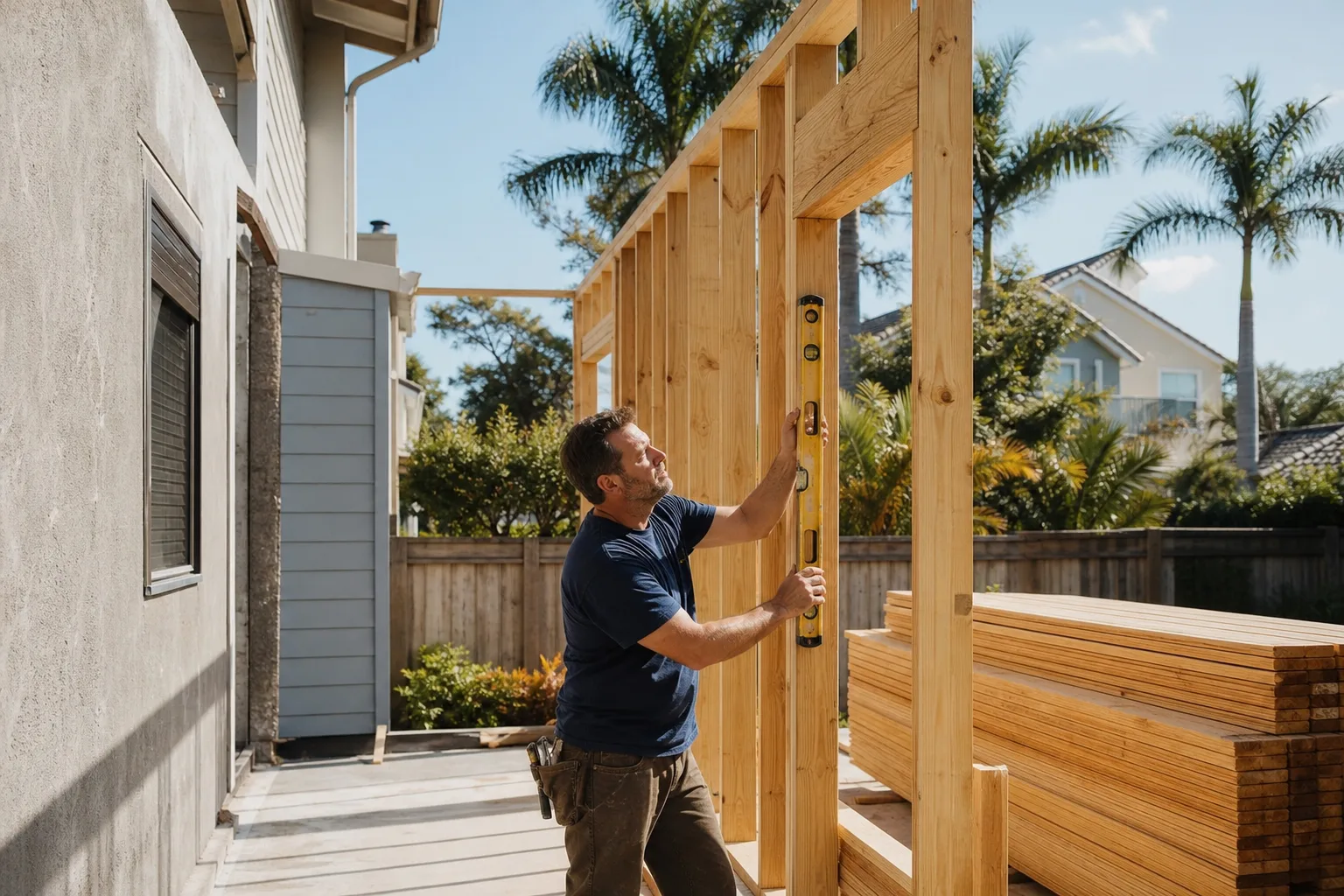
Cosmetic vs Structural: Where the Line Actually Falls on Santa Ana Homes
On Santa Ana’s older housing stock, deciding what’s handyman work and what isn’t gets murky fast. Replacing rotted siding on a stucco-over-wood-frame bungalow sounds cosmetic. Once the stucco comes off and the shear-wall framing is exposed, it can turn into engineer-review territory. A licensed GC knows to stop, document, and call for review. A handyman typically keeps working, which is exactly how that unpermitted record starts.
Here’s a rough way to sort it. This is the same way we open a walkthrough for homeowners:
- Fine for a handyman: a sticking interior door, a loose cabinet handle, a patch of drywall, furniture assembly, caulking around a tub.
- Needs a licensed contractor: any wall opening that touches framing, any electrical panel or new-circuit work, any plumbing rough-in, roof sheathing or flashing repairs, and any job that needs a permit.
- Definitely not handyman work: structural changes, ADU or garage conversion, and any framing exposed behind stucco on a pre-1950s home. Those need engineer review before anyone picks up a tool.
Two more Santa Ana specifics. The dry, mild winters here and the hot, dry Santa Ana wind episodes each fall crack stucco and accelerate dry rot, and that deterioration is usually more than it looks by the time it’s visible. If your goal is a permitted ADU or a garage conversion, those are GC-scope jobs, because both the permitting and the retrofits an aging wood-frame house needs have to pass inspection. Our own take, after enough Santa Ana walkthroughs: when we open up a wall on one of these homes, we find wiring or framing that needs a real licensed call about half the time.
General Contractor vs Handyman: A Side-by-Side Look
| Item | Handyman | Licensed GC (Rowan Construction Group Santa Ana) |
|---|---|---|
| Legal job limit | Under $500 labor + materials, no permit | No cap; permits pulled |
| Bond | None required | CSLB bond, at least $25,000 |
| Insurance | Usually none; your homeowner’s policy | Li |
There’s no licensing gap to argue about for small jobs; a handyman is the right and legal choice under $500, no permit needed. Past that threshold, the trade-offs get lopsided fast. The project file we leave behind, a pulled permit and a documented photo record, becomes evidence of legal, inspected work at closing. A string of unpermitted handyman jobs leaves the opposite. Our written pricing doesn’t change that, but our free second opinion on any written estimate will show you exactly where the exposure sits, line by line, at no charge. And on finishes like IKO and Boral products, we name the manufacturer and the spec in the quote, not a vague “materials included.”
Want the price in writing before anyone picks up a tool? Look at our home page for how projects get scoped and quoted.
What “Documented” Actually Means on a Rowan Job
You’ll hear contractors say “we document everything.” Here’s what it means here. Every visit produces a photo record as a standard deliverable, not an add-on. Every change gets a signed change order before work continues. Every project leaves a permit trail and a written warranty. Under the Haven Standard, Clause 1 is simple: the price is written before anyone starts, on every job from kitchen remodeling through home additions and ADU construction.
Crews are background-checked and uniformed, a live person answers the phone 24/7, and our technicians have up to 19 years of experience. None of that is a guarantee you’ll never have a problem. It’s a guarantee that when one shows up, it gets found, fixed, and written down. The 365-Day Done Right Promise backs that up: if it isn’t done right, we make it right.
Common Local Scenarios We See in Santa Ana
Downtown and Lacy bungalows: rotted siding that turns into exposed shear-wall framing once the stucco comes off. That’s a GC-and-engineer job, not a handyman job.
Rear-alley garages: homeowners want the detached garage converted, but first we have to confirm the existing walls and utilities were built legally and that the alley gives legal access. This is garage conversion territory.
Pre-1950s interiors: kitchen and bath remodels where hidden wiring or framing needs a licensed call before the new work goes in. That’s how a bathroom remodel or kitchen remodel avoids an unpermitted surprise down the road.
Exterior and dry-climate wear: heat-cycling stucco cracks and dry rot calling for real roofing or windows and doors work, and some properties near the eastern foothill edges also need ember-resistant venting as part of a defensible-space plan.
FAQs
A handyman handles small repairs under $500 in labor and materials with no permit; a licensed general contractor can take on any size, structural, electrical, plumbing, and permitted work. The real difference is liability: a GC carries a CSLB bond, general liability insurance, and workers’ comp. A handyman’s helper injury typically lands on your homeowner’s policy. Call (833) 853-5955 and we’ll tell you which category your job falls into.
Only minor, non-permitted swaps that stay under the $500 total, like changing a light fixture or a faucet; new circuits, panel work, and plumbing rough-ins require a licensed contractor. If the job needs a permit, a handyman legally can’t take it. That’s a clear line, and we’ll help you figure out where your project sits.
The hourly rate is lower, but the total cost often isn’t once unpermitted work has to be corrected or disclosed at sale. A typical kitchen remodel in Santa Ana runs $14,000-$45,000 and an ADU runs $90,000-$220,000, and unpermitted work can add roughly triple a small job’s original price in legal and redo cost. A written price from a licensed GC is the cheaper path once you account for what a bad job leaves behind. Call (833) 853-5955 for a free estimate.
Yes. Garage conversions and ADUs involve structural, electrical, plumbing, and permitting work, which puts them squarely in GC scope, and Santa Ana’s older wood-frame homes usually need retrofits before they’ll pass inspection. Expect $30,000-$80,000 for a garage conversion and $90,000-$220,000 for a full ADU. Call (833) 853-5955 to get the numbers in writing.
If you’d rather have it looked at, Rowan Construction Group Santa Ana offers a no-pressure assessment in Santa Ana. We’ll walk the job, tell you plainly whether it’s handyman or GC work, and hand you a written price before anything starts. Call (833) 853-5955.
Written by the team at Rowan Construction Group Santa Ana, serving Santa Ana, CA.